2013-2014
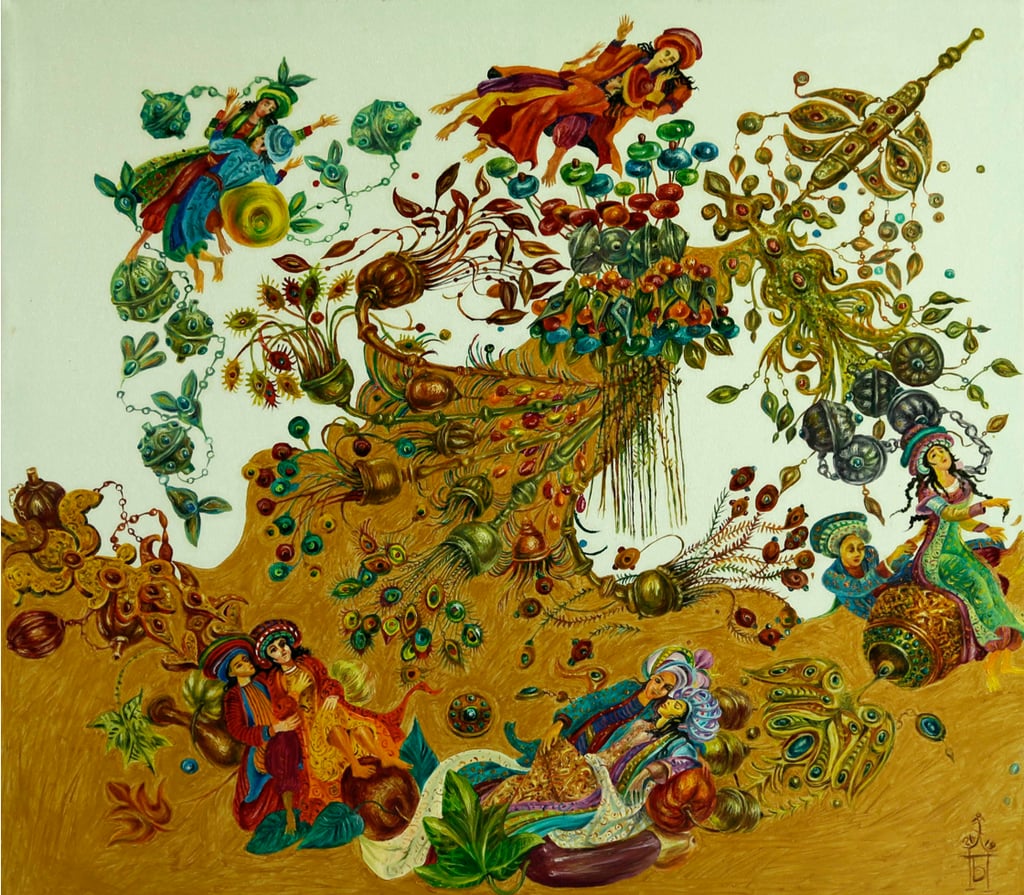
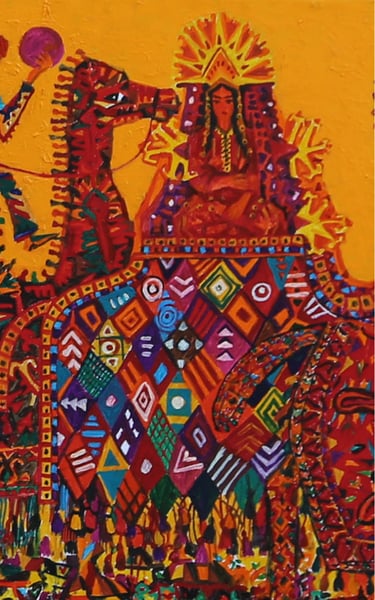
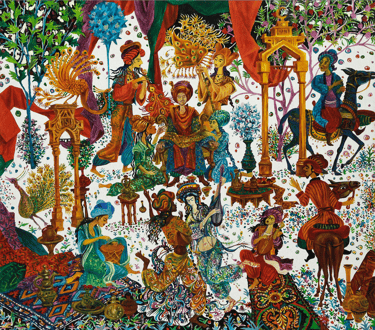
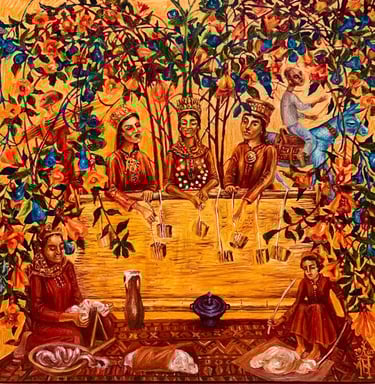
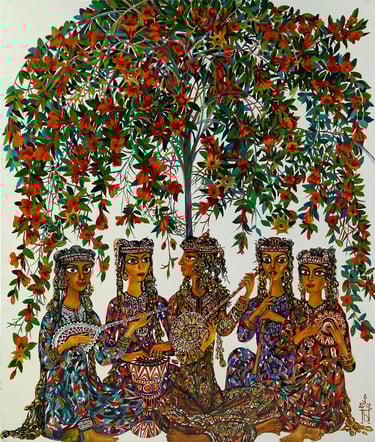
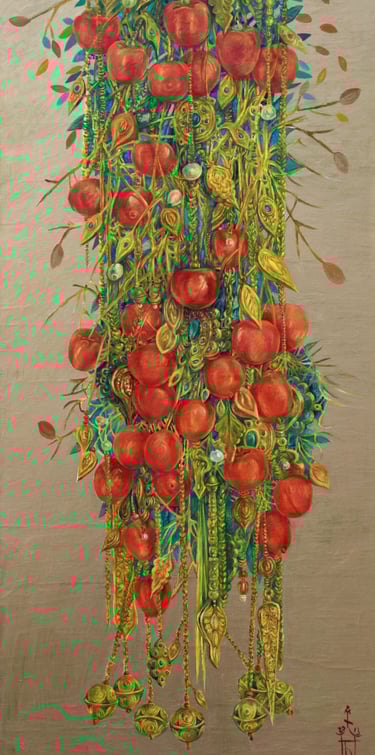
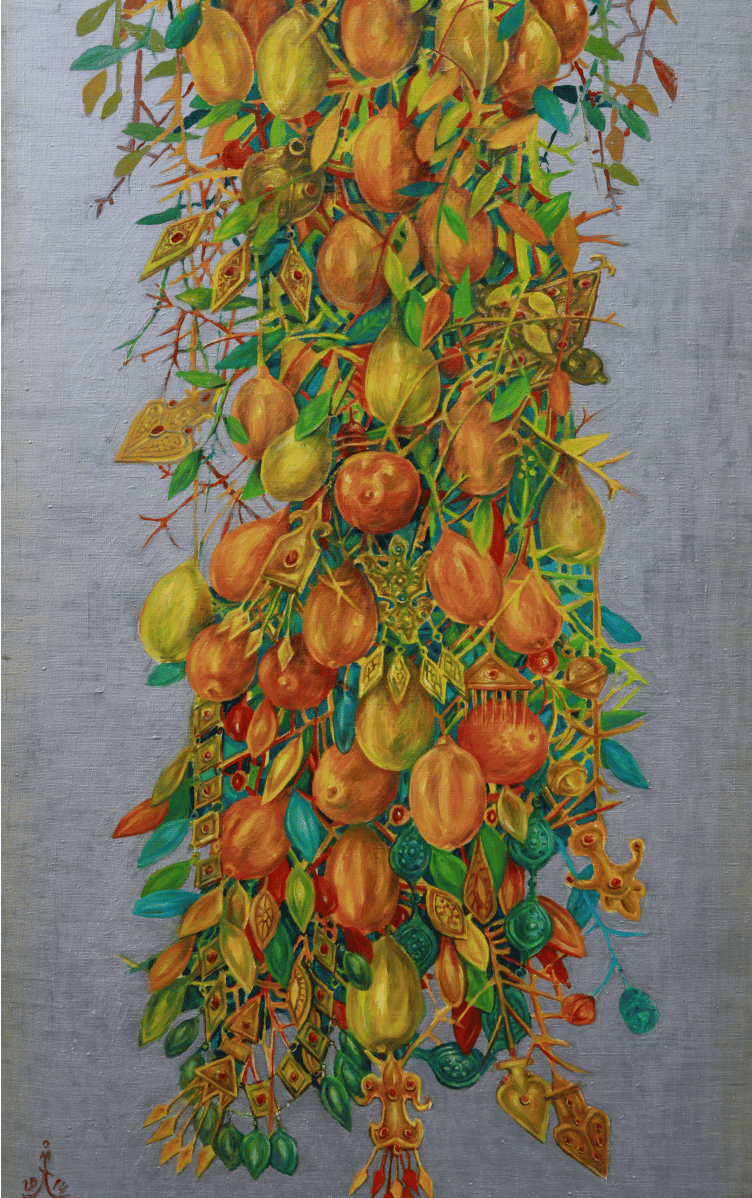
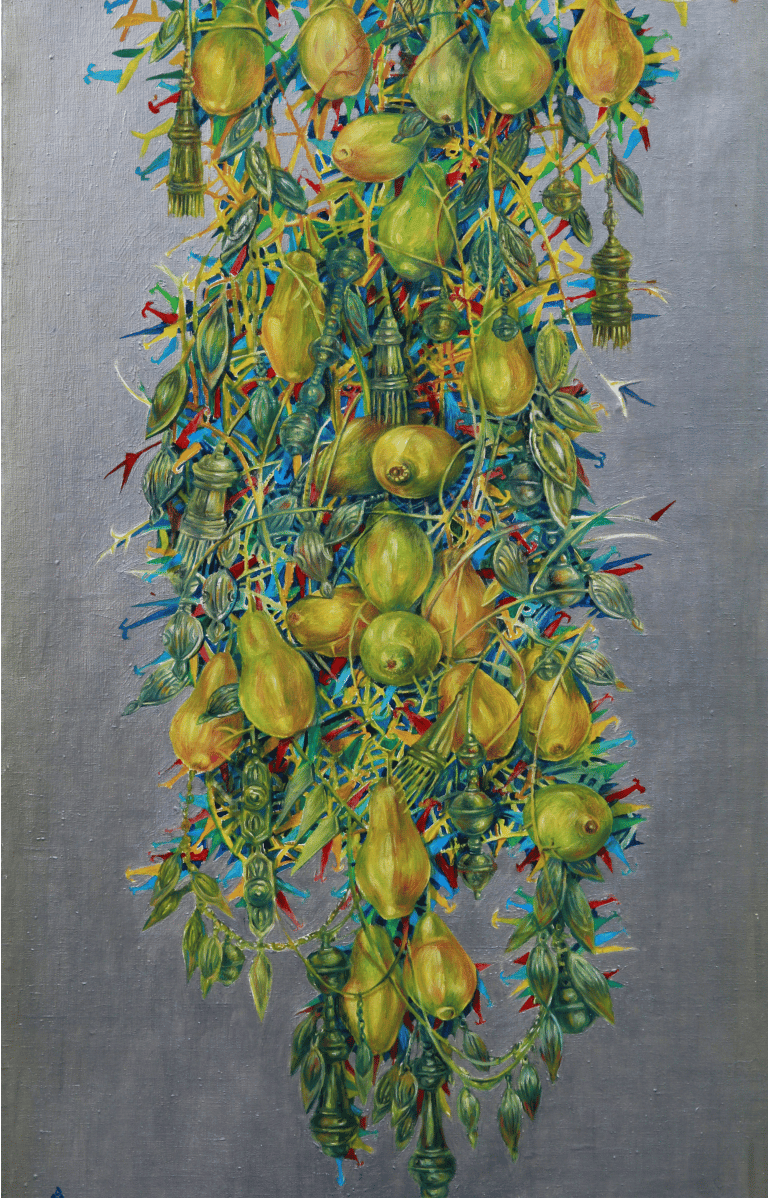
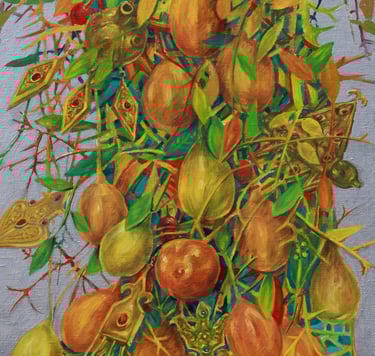
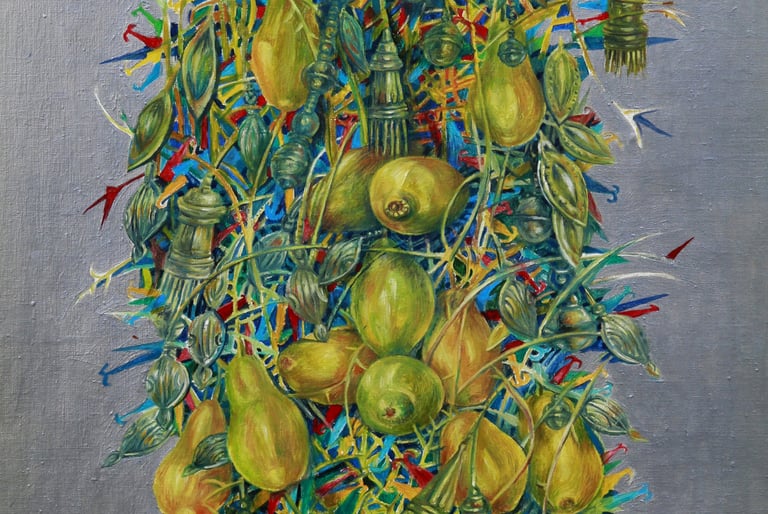
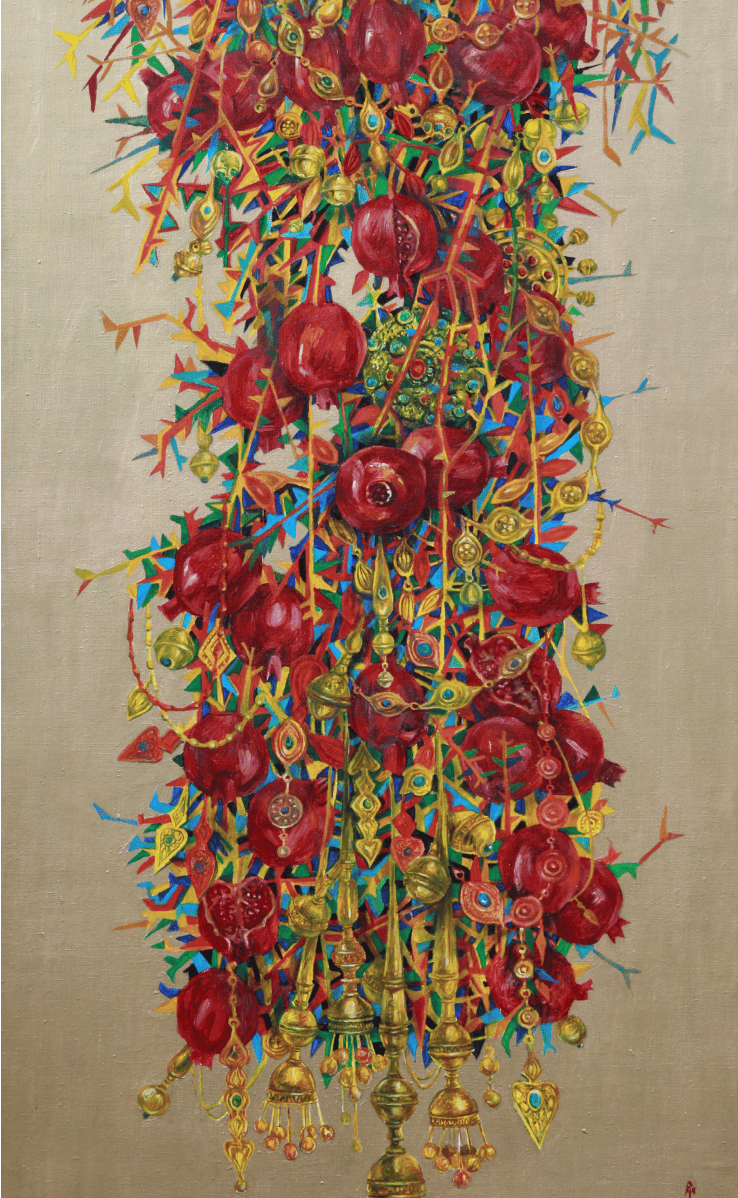
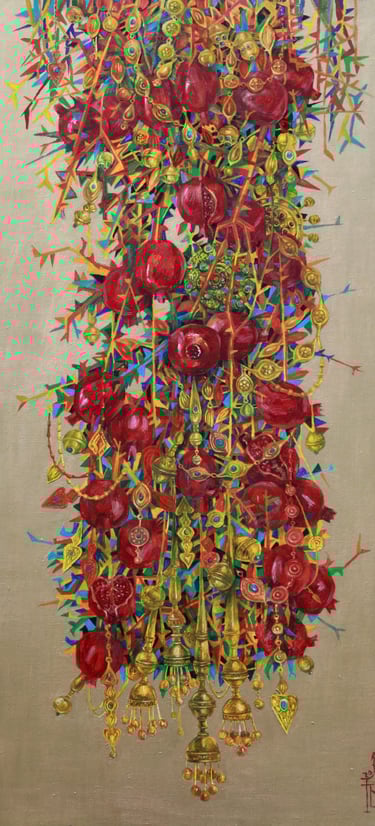
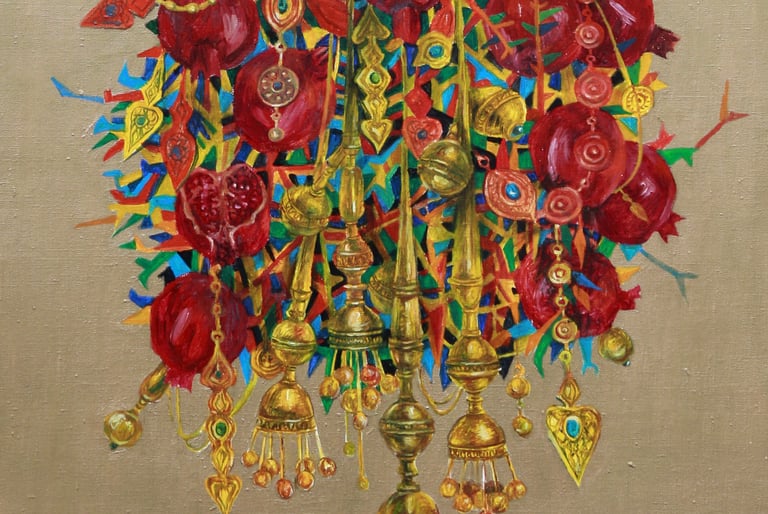
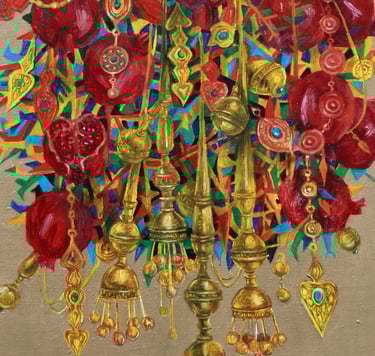
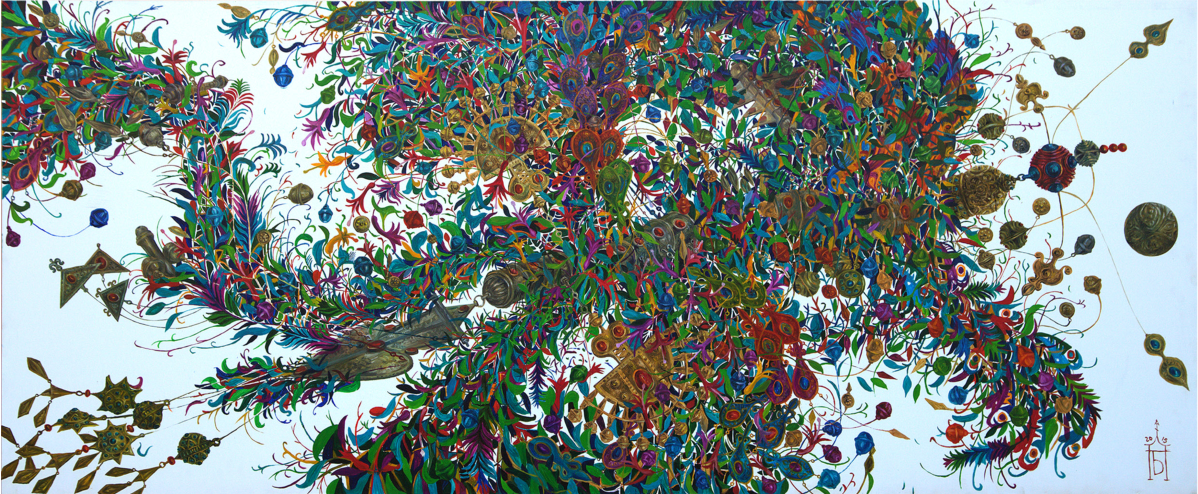
Images of jewelry is the most common motifs of paintings of B. Amansahatov. Jewelry plays an important role from the “small” detail of compositional construction to a symbolic sign, from perception of adornment as a thing to interpretation to allegorical meaning as adopted by the cultural tradition.
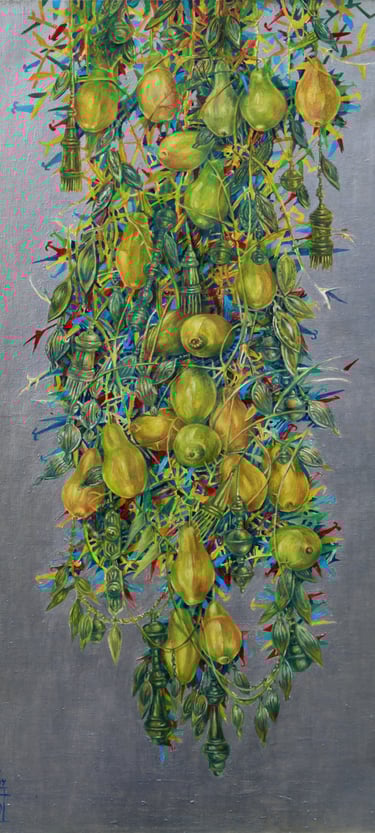
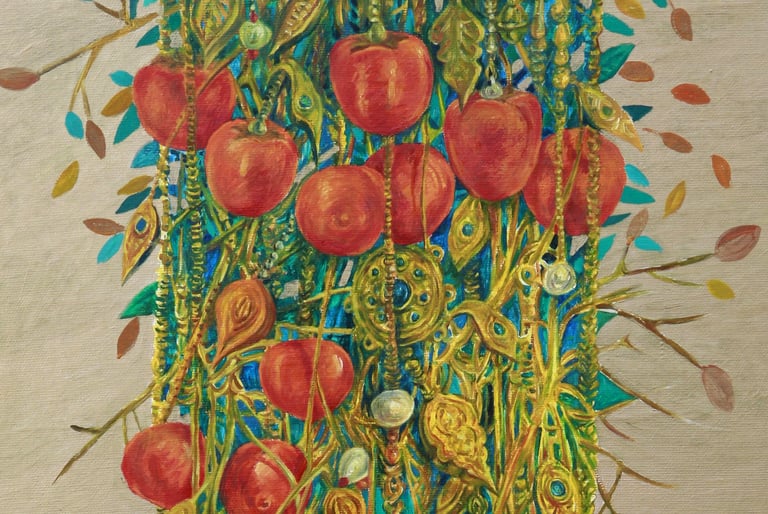
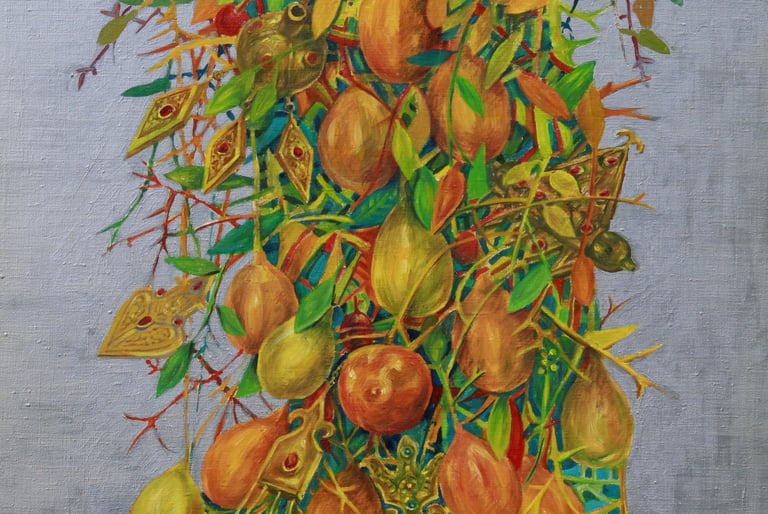
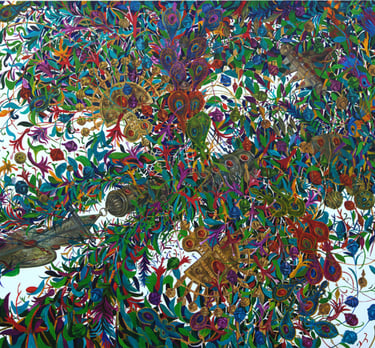
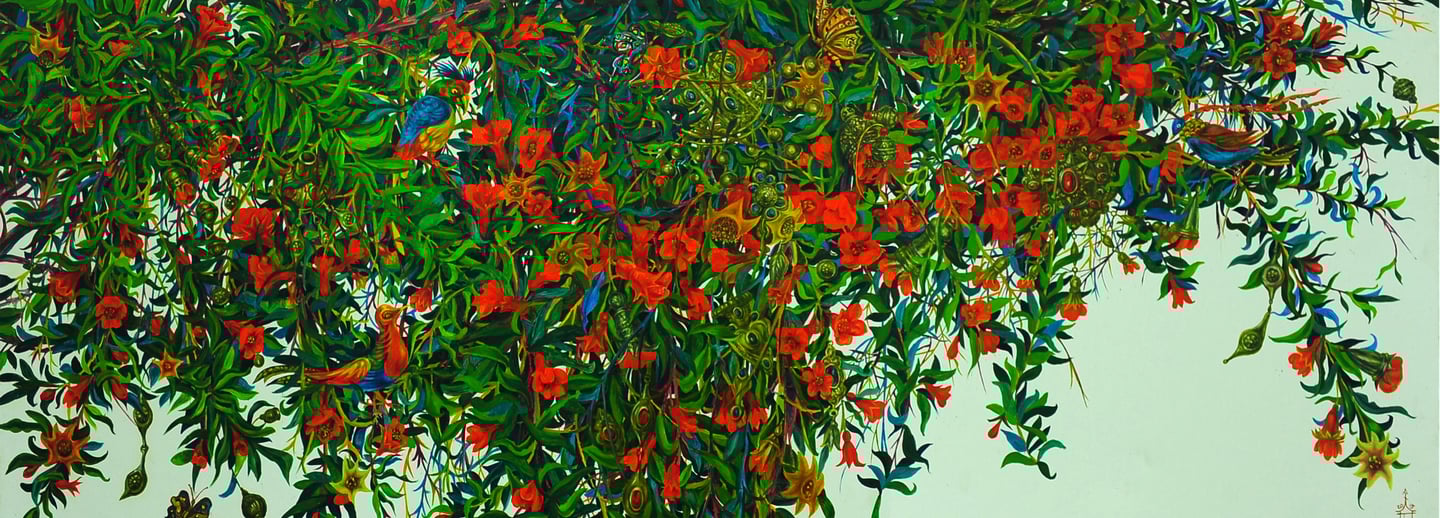
The master achieves excellence in rendering a dynamic state of nature in the carefully designed series “Radiant East”. The artist conveys the inexhaustible beauty of nature and artificial objects in the interweaving of ornaments with branches, in the curves of restless motion of leaves, in the clear rhythm of large fruits, in the adornments. Paintings remind of the finest melodies of folk music through images, impalpable details, linearity.
Series: "Radiant East"
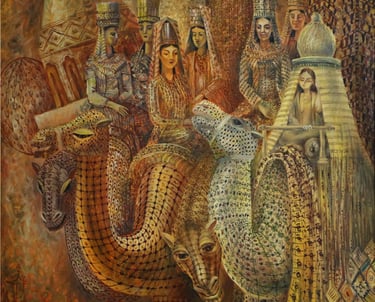
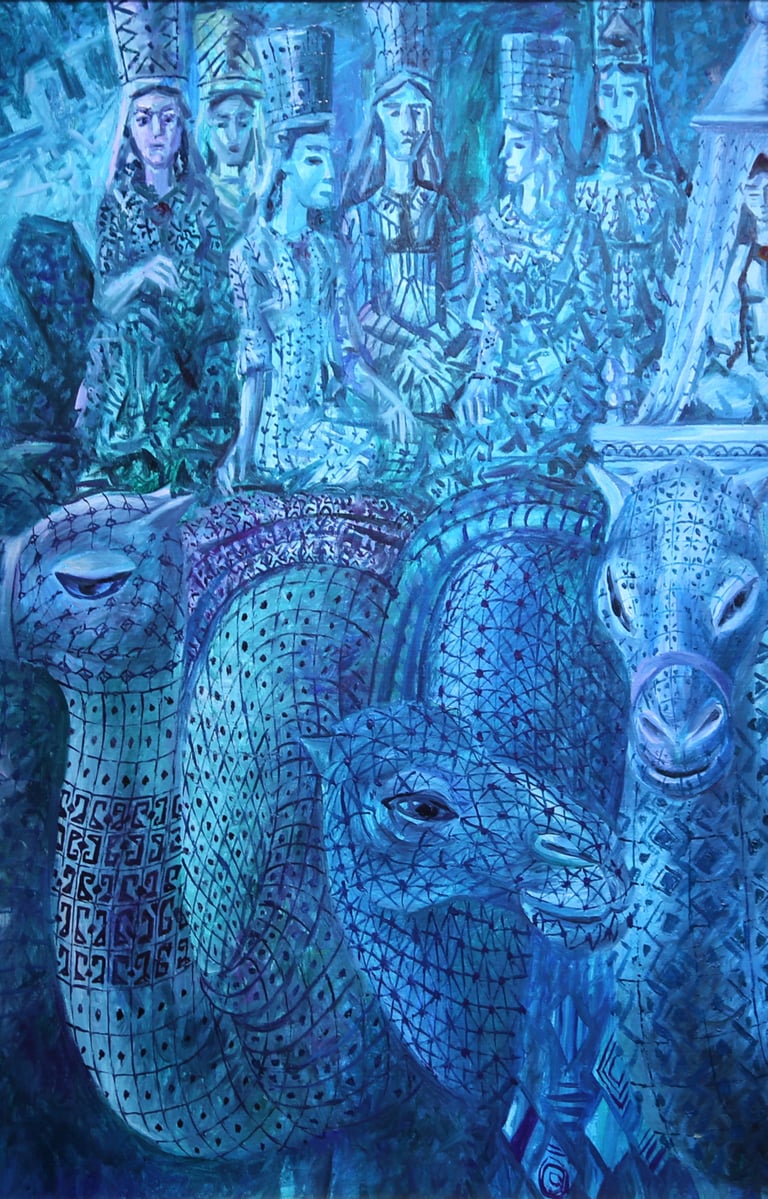
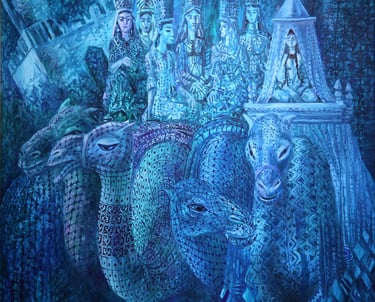
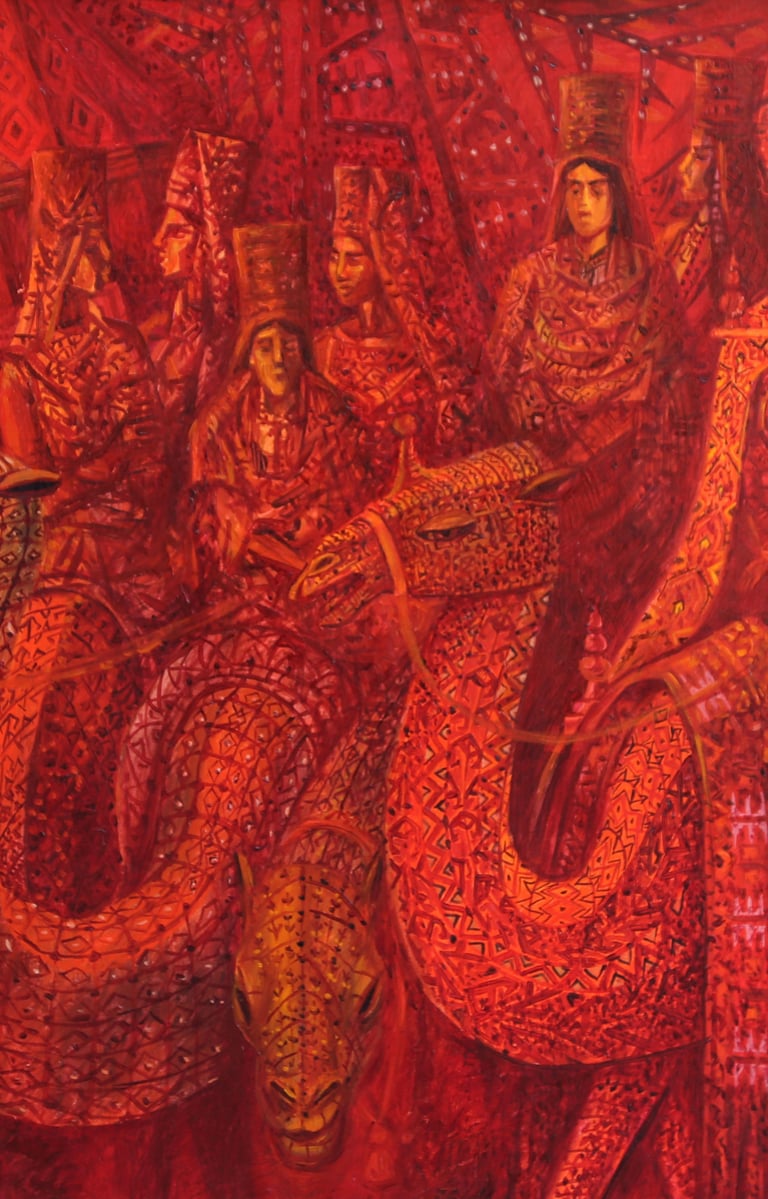
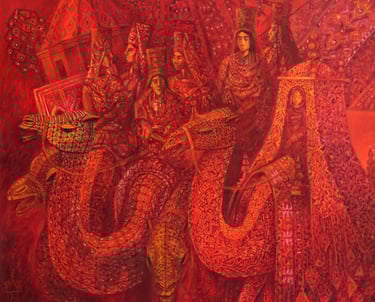
Triptych: “The Sun Of Karakum”
2015
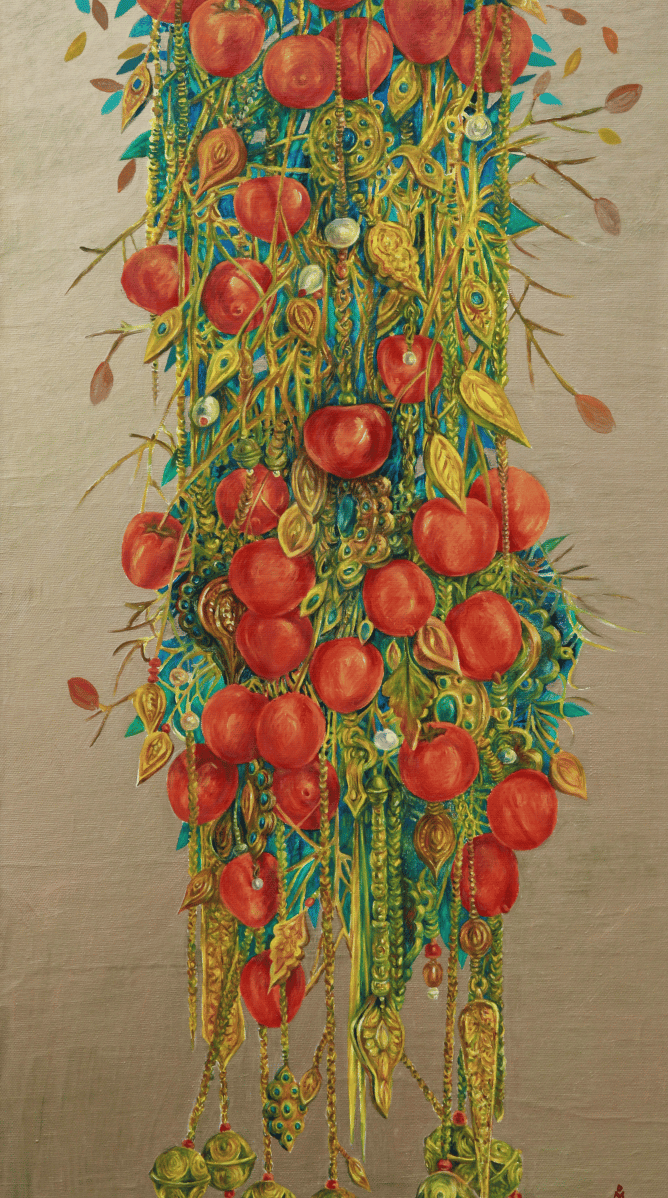
The absolute congeniality of the parts of the triptych - “The White Sun of Karakum”, “The Blue Sun of Karakum”, “The Red Sun of Karakum” in the general nature of the composition, as well as their similarity with the painting “Pharaohs” (1998), reveals a peculiar path of continuous search of the artist, who achieves something new and expressive in each subsequent version of the developed topic.
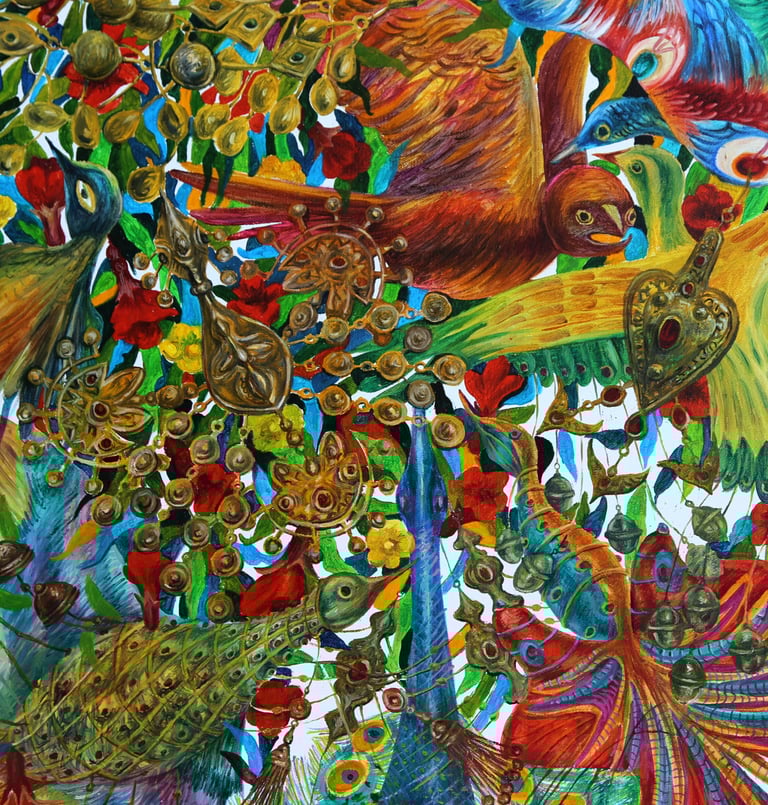
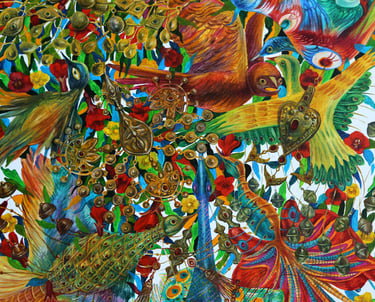
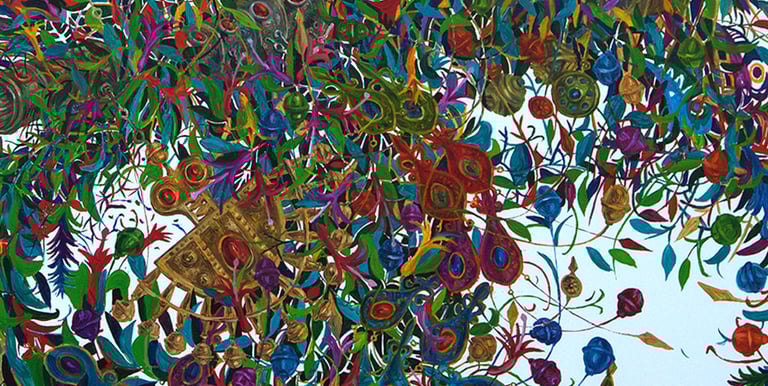
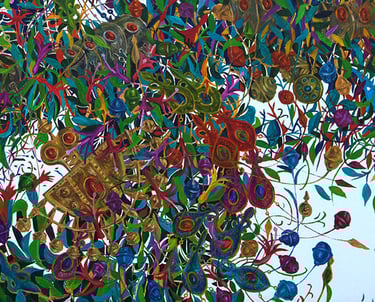
Triptych: “Life”
2015 - 2016
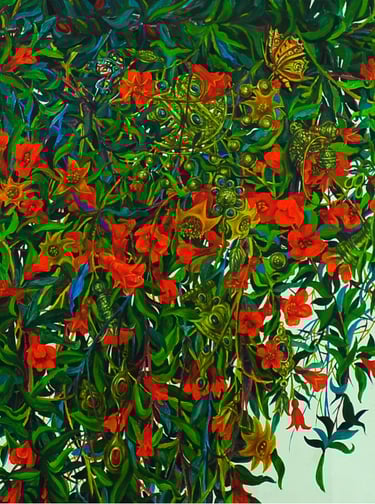
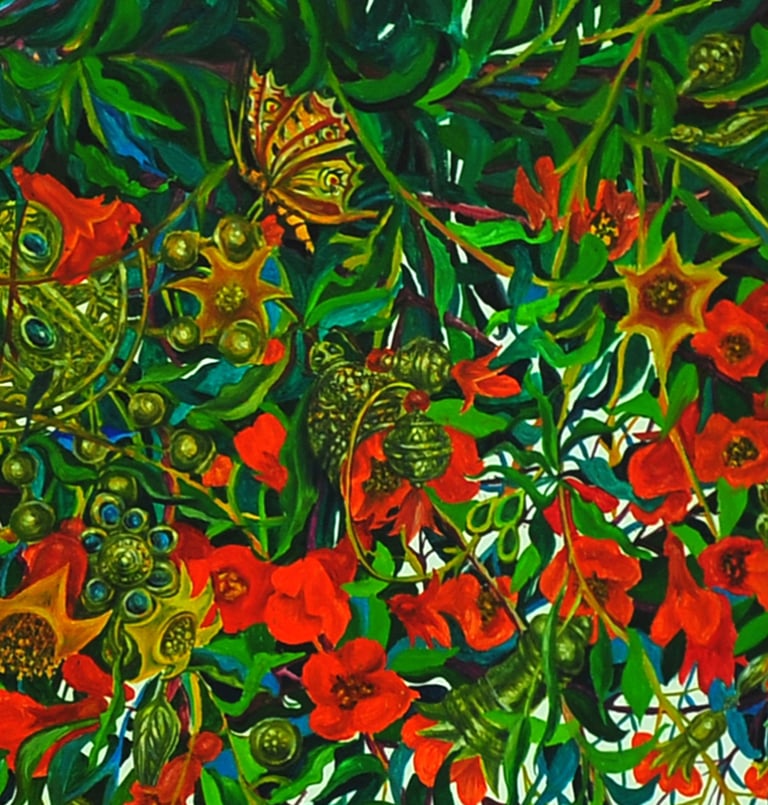
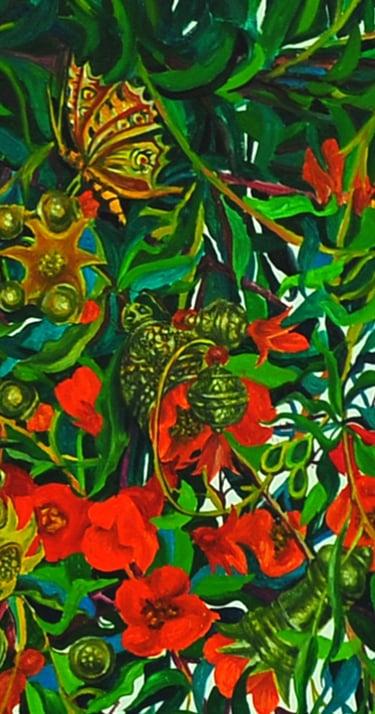
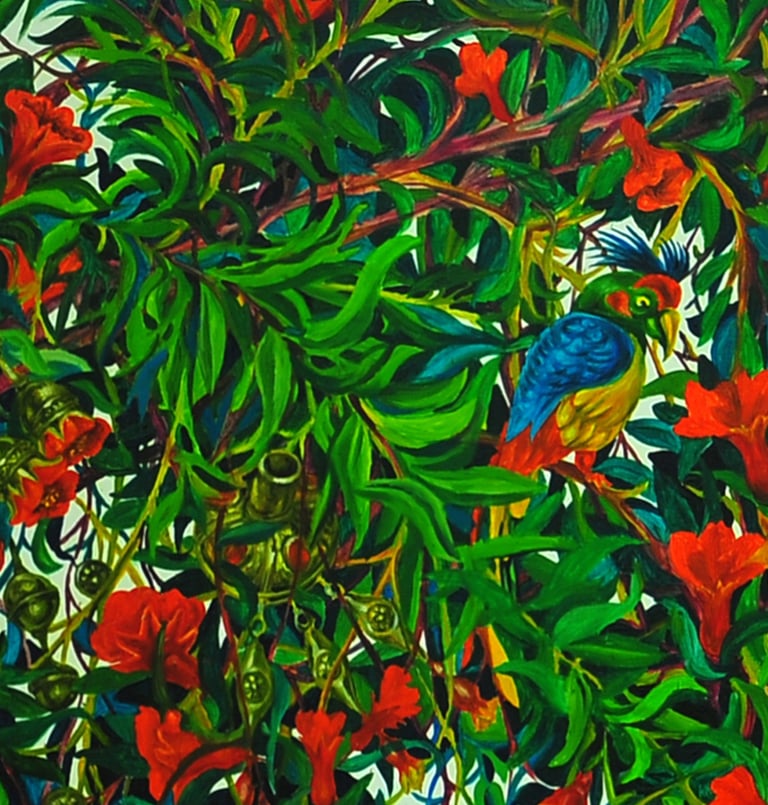
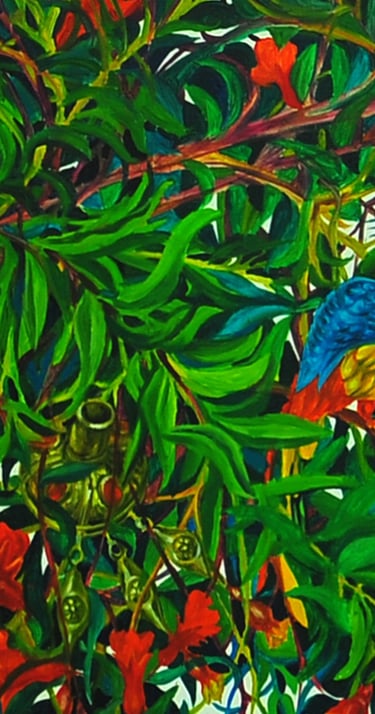
Blank white canvas as a background for his work the triptych “Life” (“Beginning”, “Perfection”, “Harmony”) is used for the first used. It clearly frames a painting tending to flexible and rounded shapes, to bright color. The world is ideated to the artist as colorful, bright, “the garden of nihility”, kingdom of eternal spring. An indelible impression is left after contemplating colors, magnificent forms, expressiveness and solemn grandeur of composition.
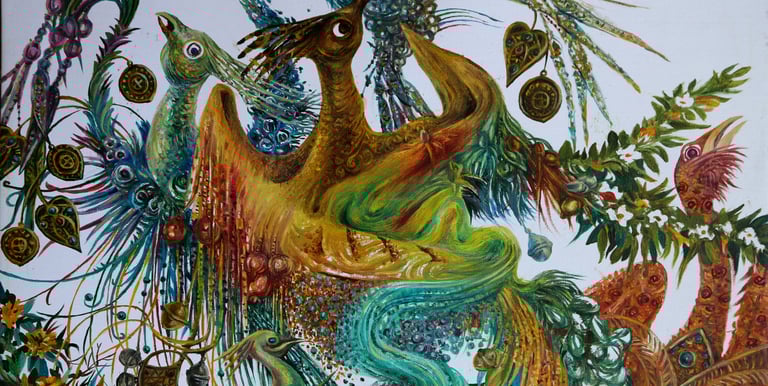
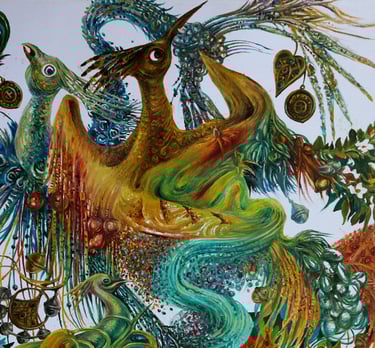
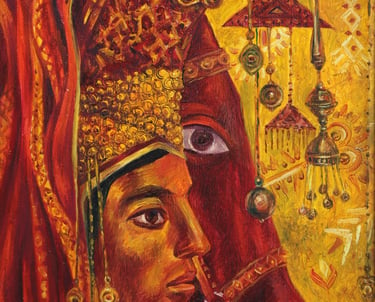
Triptych: “Karakum Nefertity”
2016
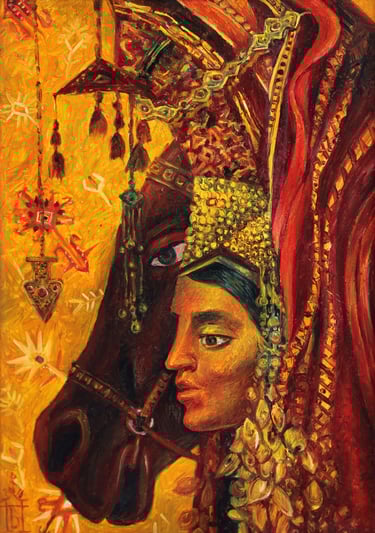
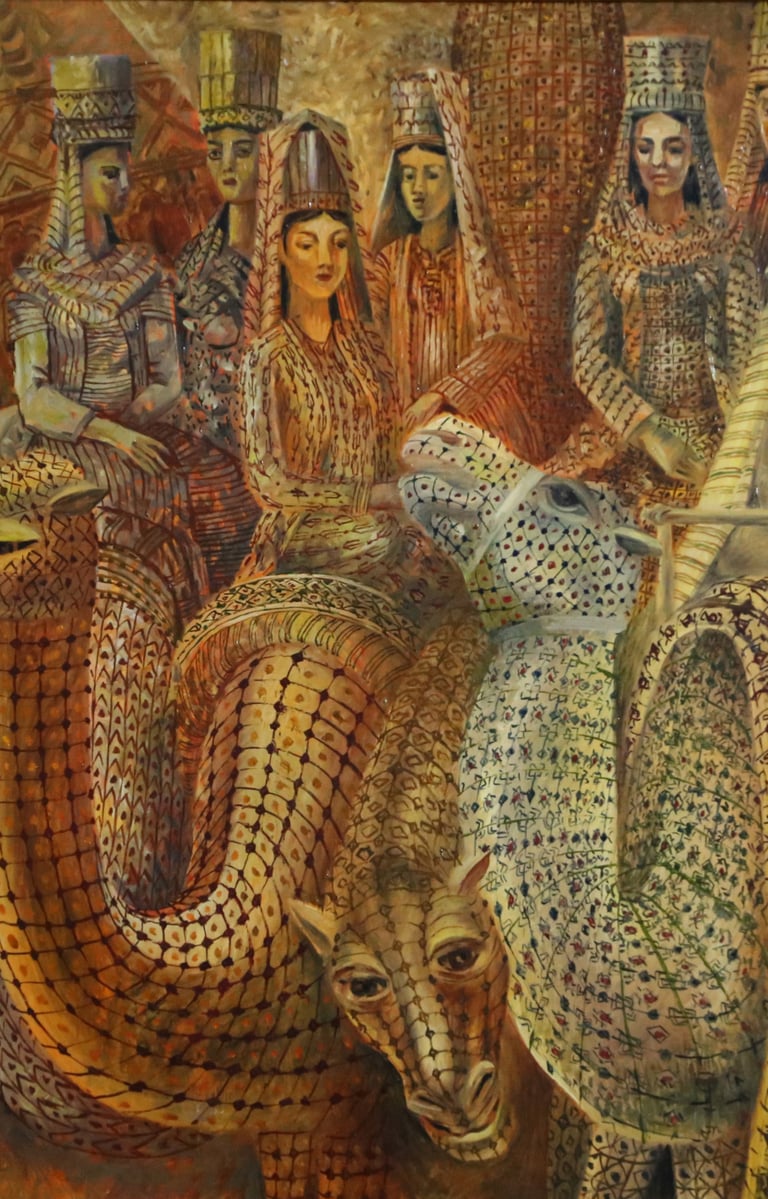
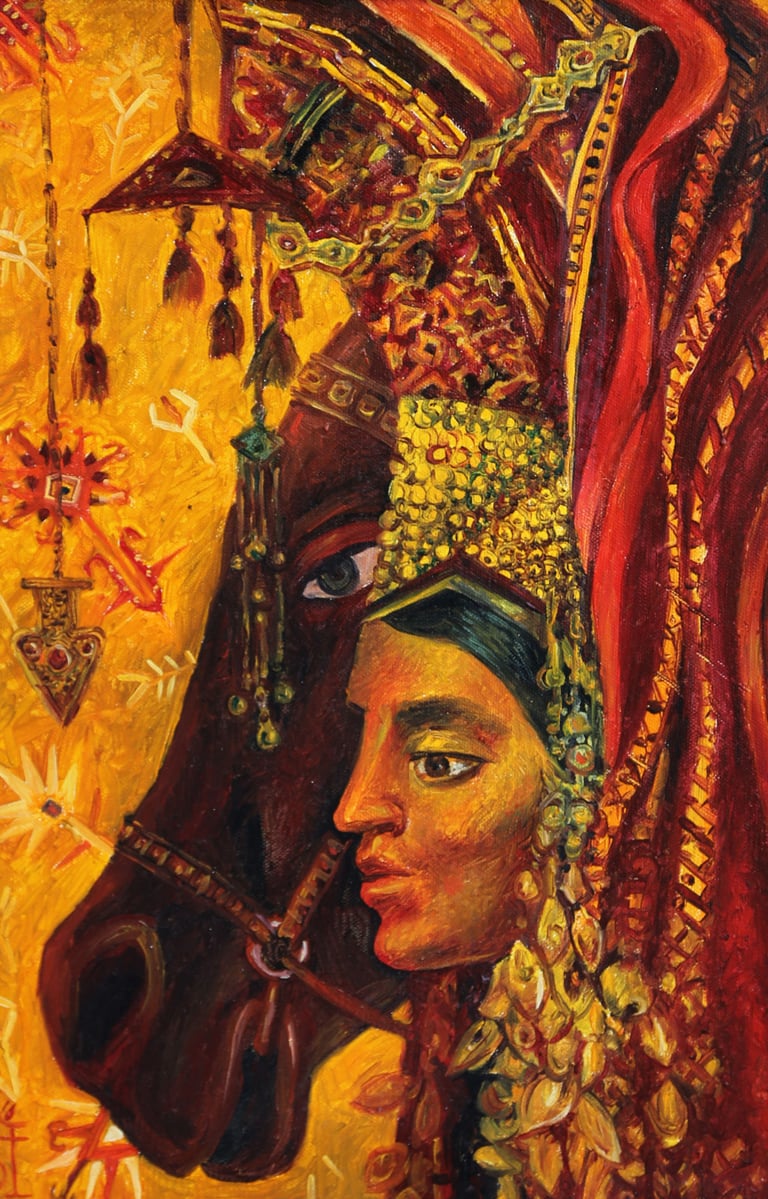
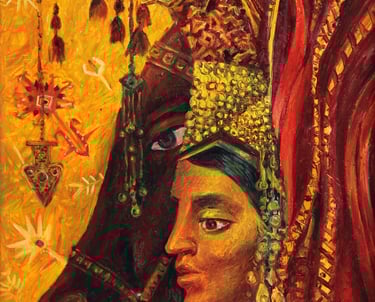
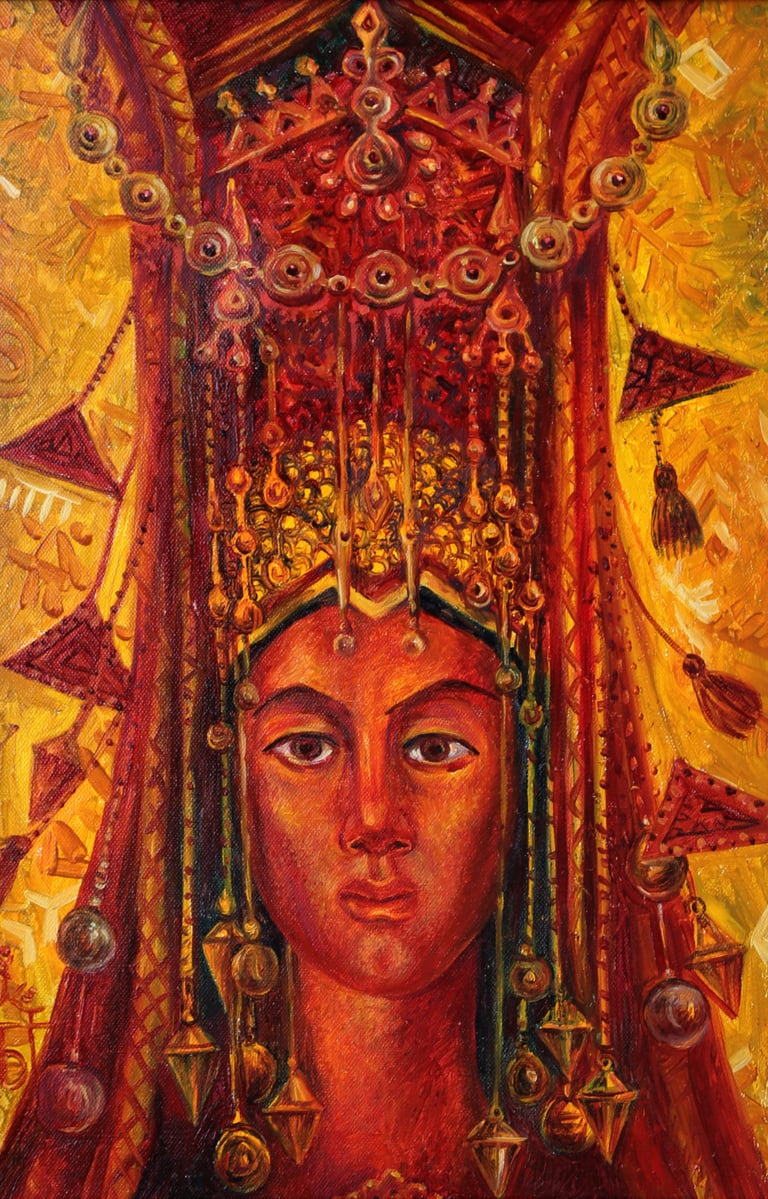
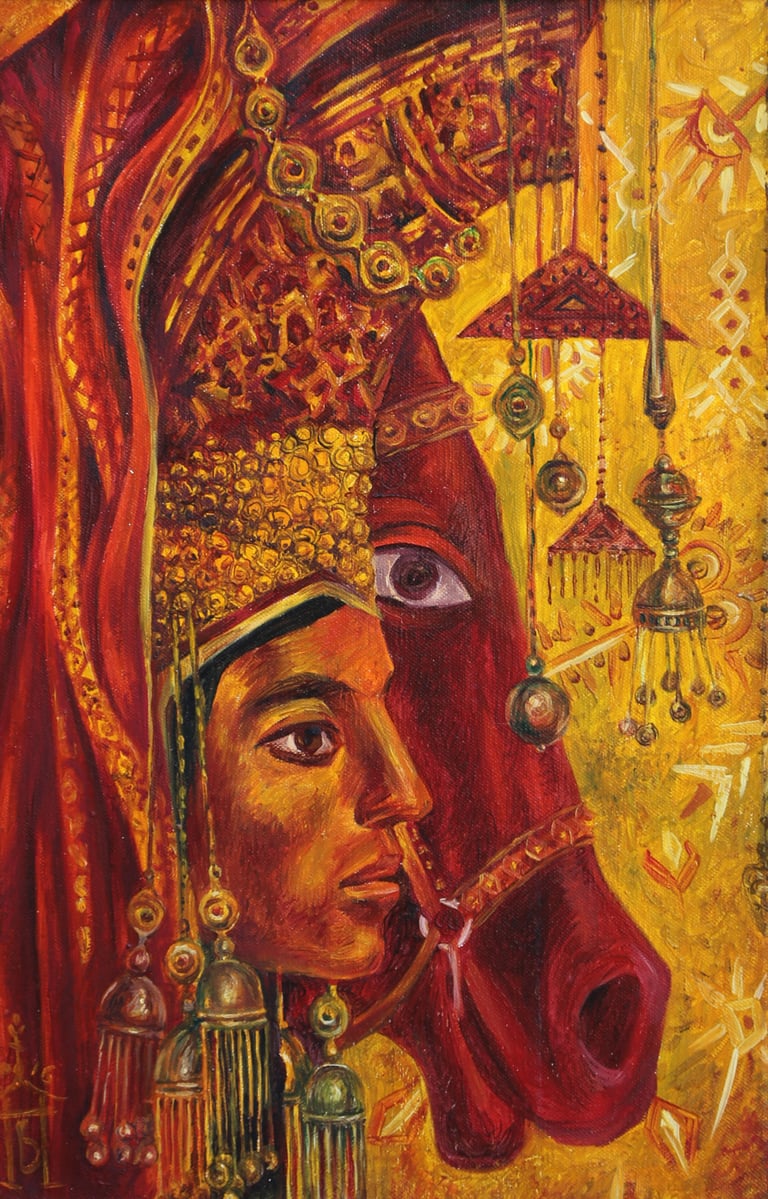
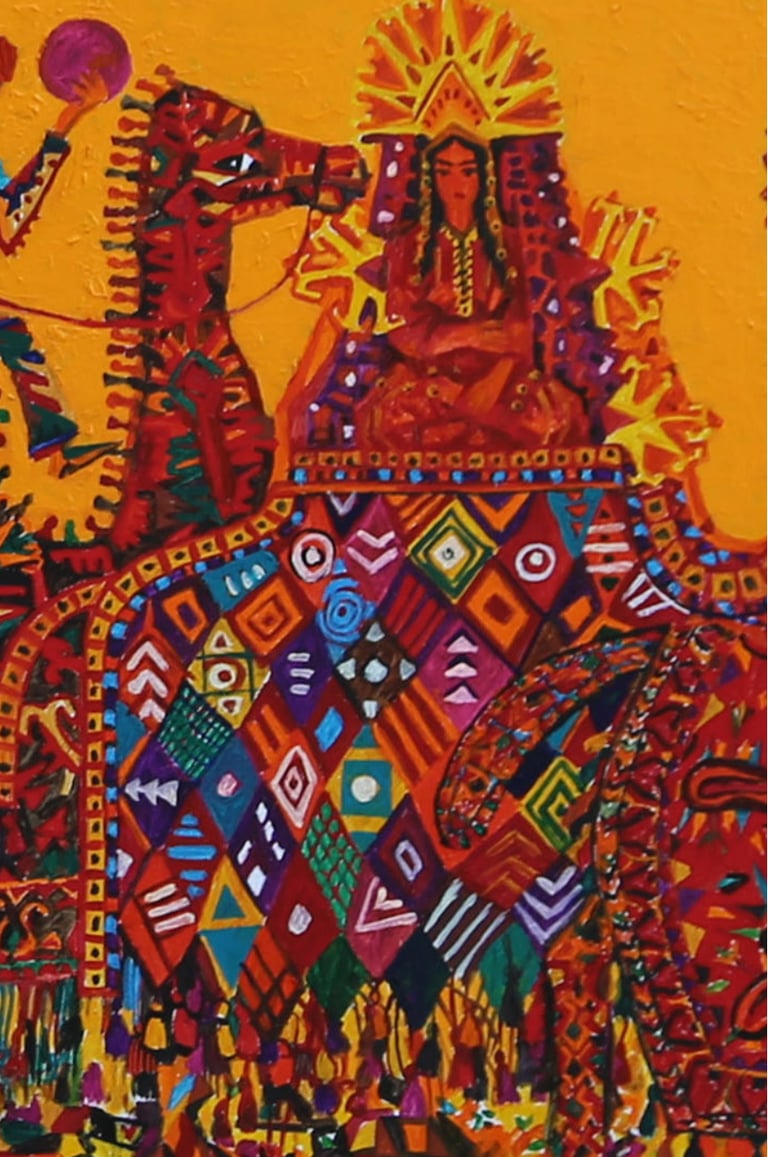
According to the artist it is the folklore that helps to the people to preserve their national originality. He creates a generalized image of the “warrior queens”, representing something “eternal” holy and highly significant for our people from time immemorial. Women dressed in festive clothes, with national high headdresses decorated with traditional silver embellishments are represented with great admiration. These images, filled with dignity, have the the features of ideal Turkmen woman, that is kind, modest, delicate and noble.
Wedding And Folk Traditions
Festive Wedding - 2017
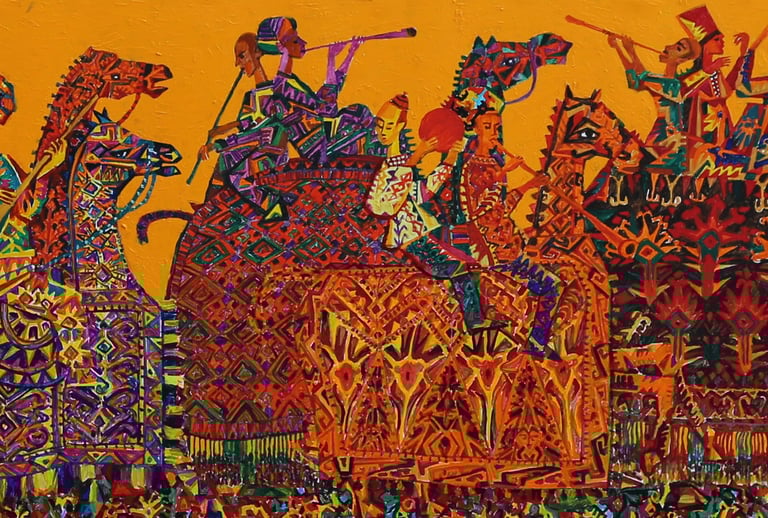
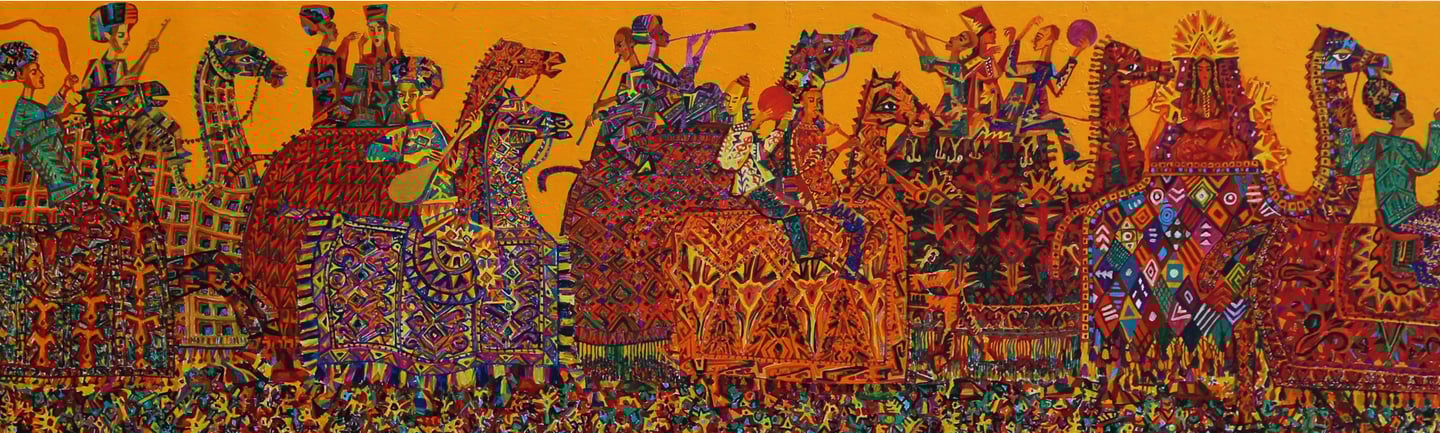
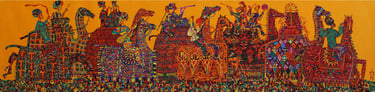
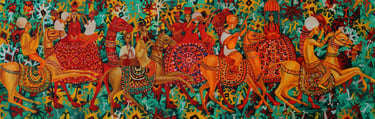
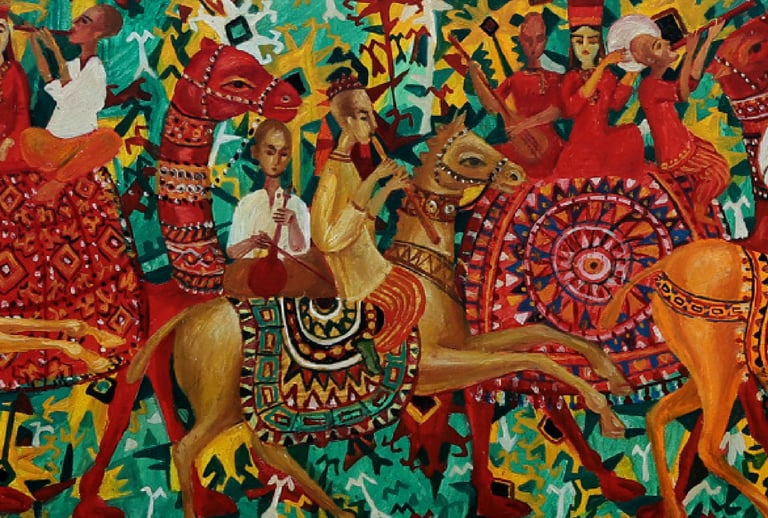
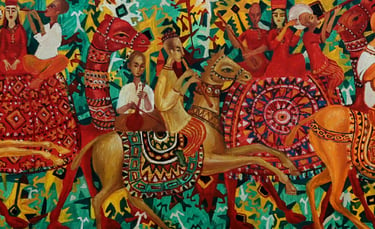
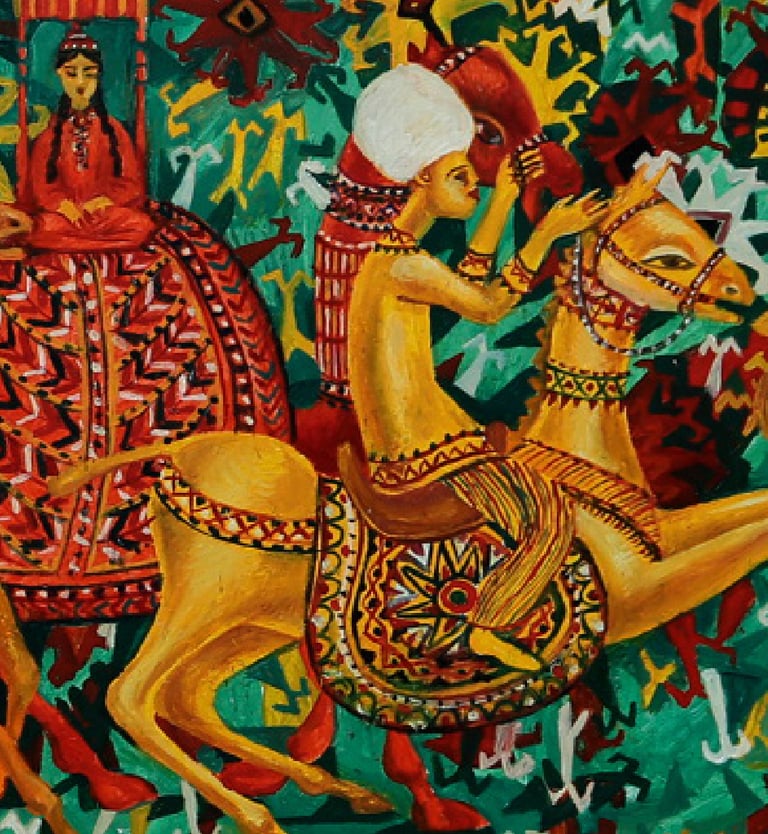
The artist has numerous paintings displaying wedding processions. B. Amansahatov accentuates Turkmen folk clothes the given work. The artist schematizes the composition, reinforces the elements of ornamentation. It emphasizes an idiomatic symbolism of the general plan, close relationship between the wedding decoration and magic, performing various functions, including amulets and purifications
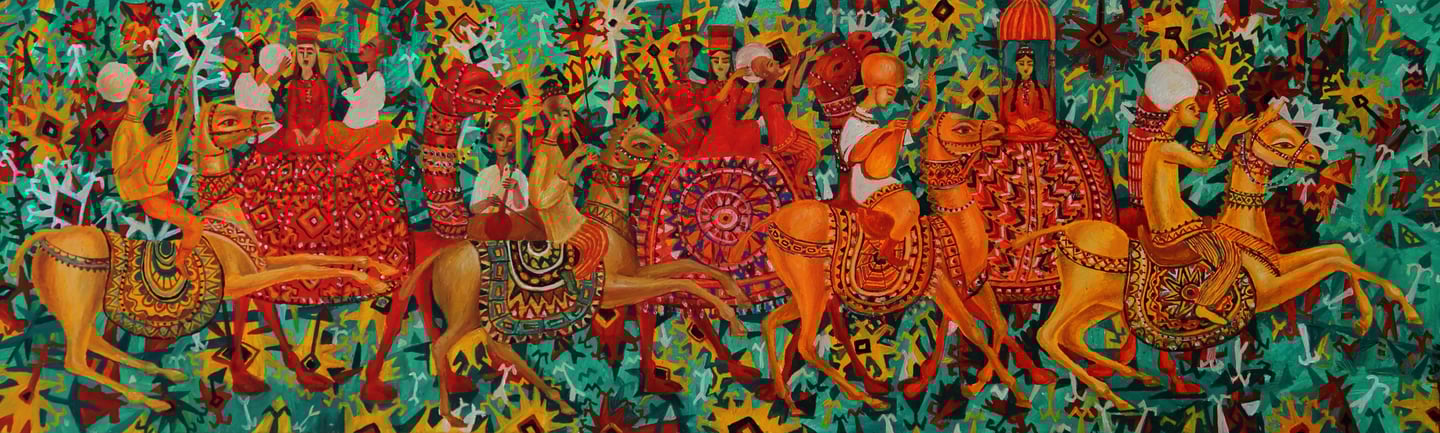
B. Amansahatov again turns to the motif of the wedding procession, but now he depicts a festive cortege against a background of lush greenery. The plot attracts the artist with vitality and energy. In order to convey all the solemnity and joy of the wedding B. Amansahatov strengthens decorativeness of the artistic language. The entire picture is covered with ornaments that are scattered in different directions, then colliding with restless lines. Their color spots sound powerful chords in isolation from the marching plastic figures. The picture is saturated with a special dynamic state of nature, expressive movements of the characters, revealing the elated mood of spring feast.
Spring Feast - 2017
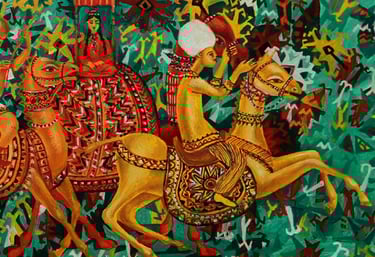
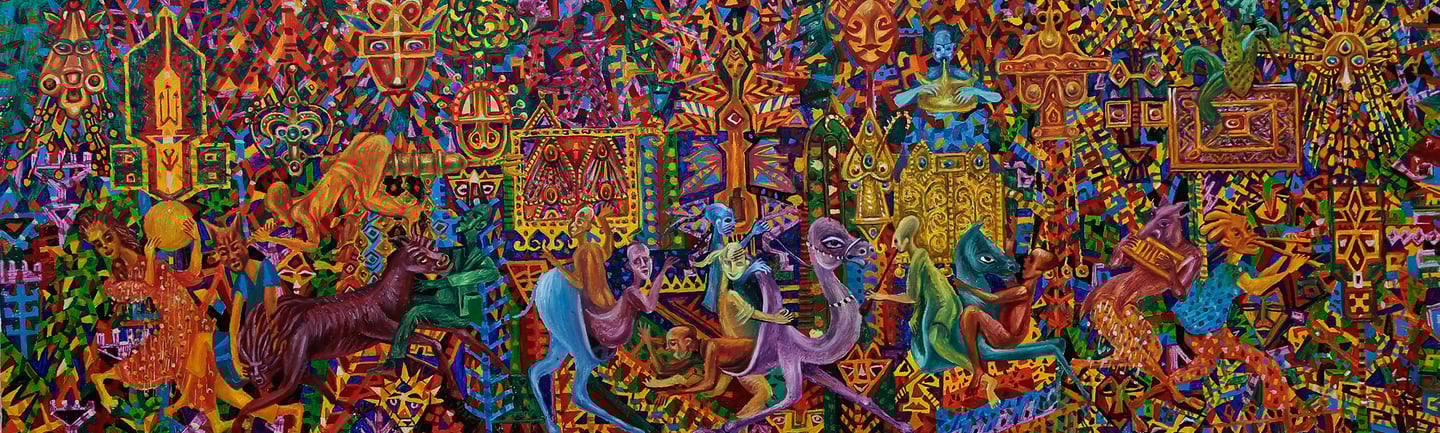
Masks, Masks, Masks - 2017
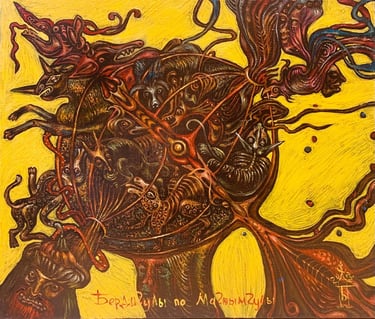
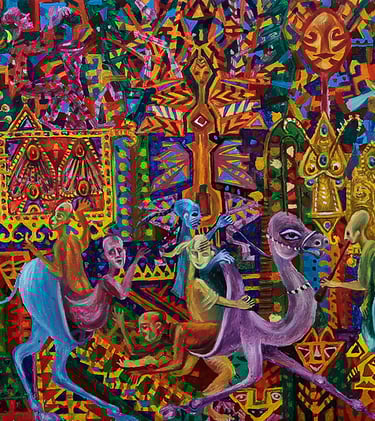
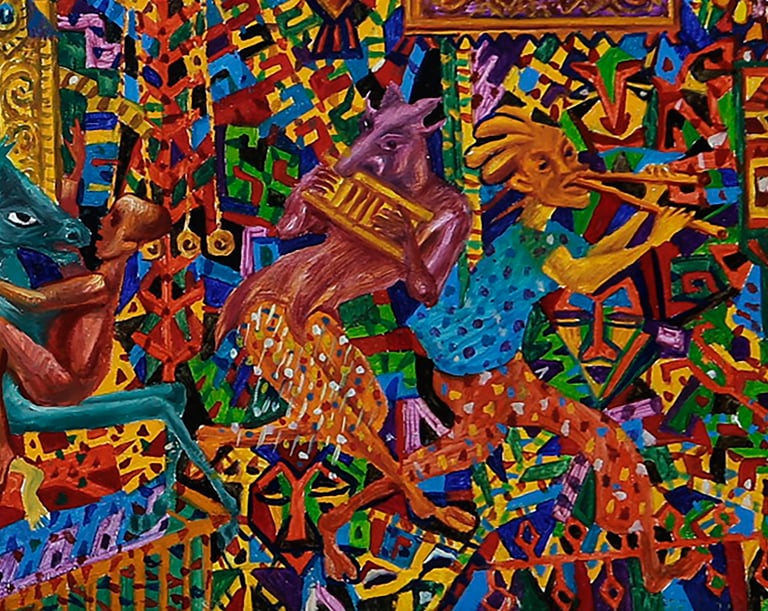
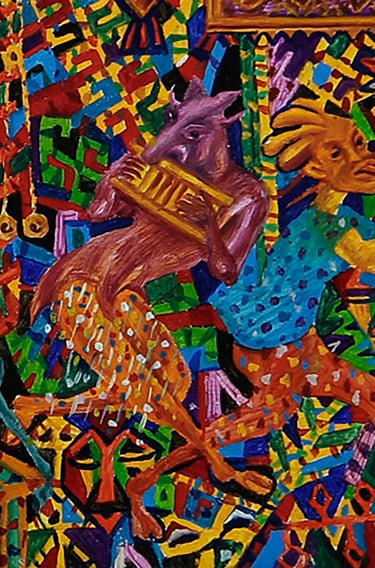
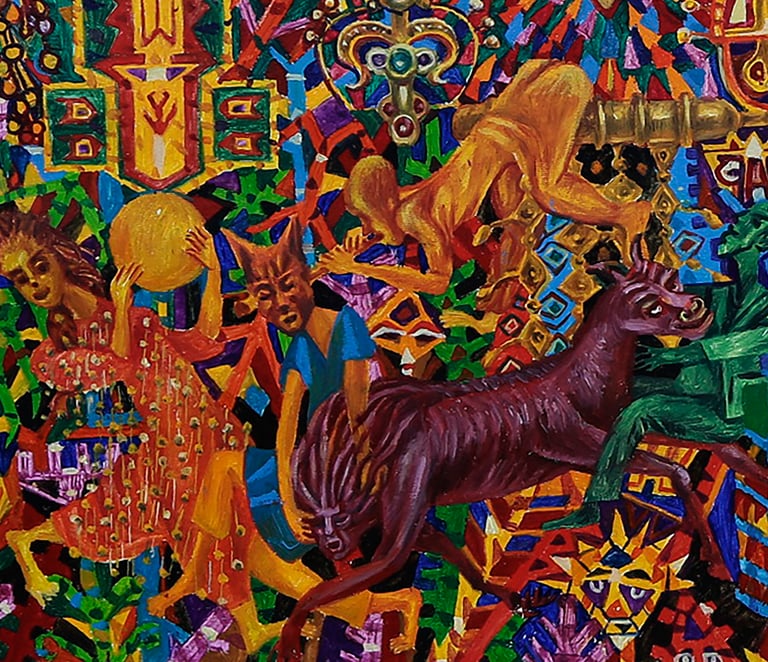
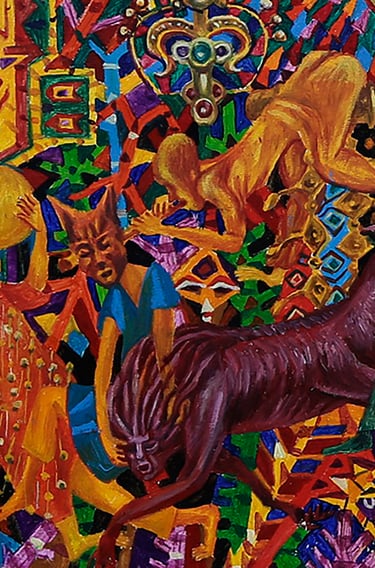
Throughout his creative life B. Amansahatov has been addressing to actual themes, dramatic plots, symbolic implications. The life of human society sometimes amazes the artist with its senseless noisy bustle. Occasionally the master perceives life as a game, whereas the characters of people as a change of masks. A theater for Amansahatov is life, and life is a kind of scene. He sees game, deceit, pretended grief and joy everywhere. Creative revelation has emotionality, impulsiveness of experience in the work “Masks, Masks, Masks ...”. The analysis of the plot of the picture reveals a very complex semantic basis of national folklore. The master reveals such an inexhaustible ingenuity in the composition that the viewer has to unravel the essence of each individual figure, framed in ornamentation of the background.
Still Life
Temptation - 2017
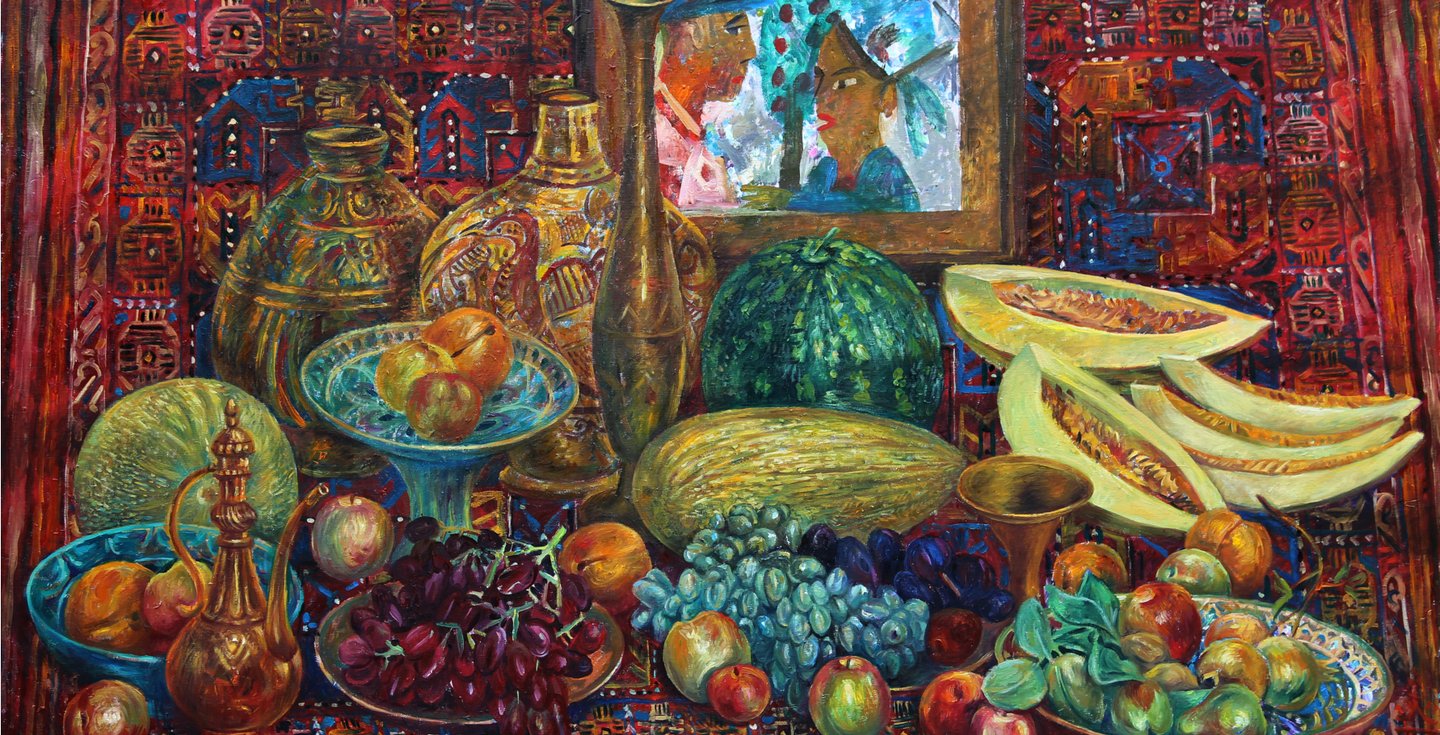
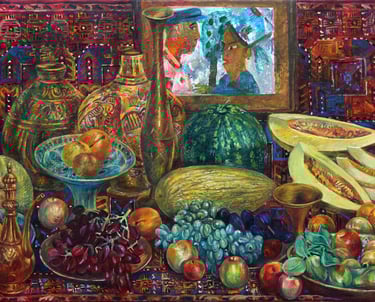
The artist admires the fabulously picturesque magnificence, sonority of colorful shades of succulent fruits and handicrafts of applied arts like carpet, metal and ceramic jugs, vases, plates in the still life “Temptation”. This magnificent abundance, materiality of objects are the body of “the triumph of life”. Placed against the background of the picture, a children’s drawing with an image of a man and a woman in front of an apple tree turns out to be a “window” that reveals the meaning of the scene. She and he are perceived as a symbol of ancestors, and therefore, temptation is implied. Moreover, taking into account the fact that the child painted a portrait of Amansahatov, then the artist seems to be saying to himself: one cannot limit oneself to a colorful side of reality and not to see the depths of its true being
Ashgabat Autumn - 2017
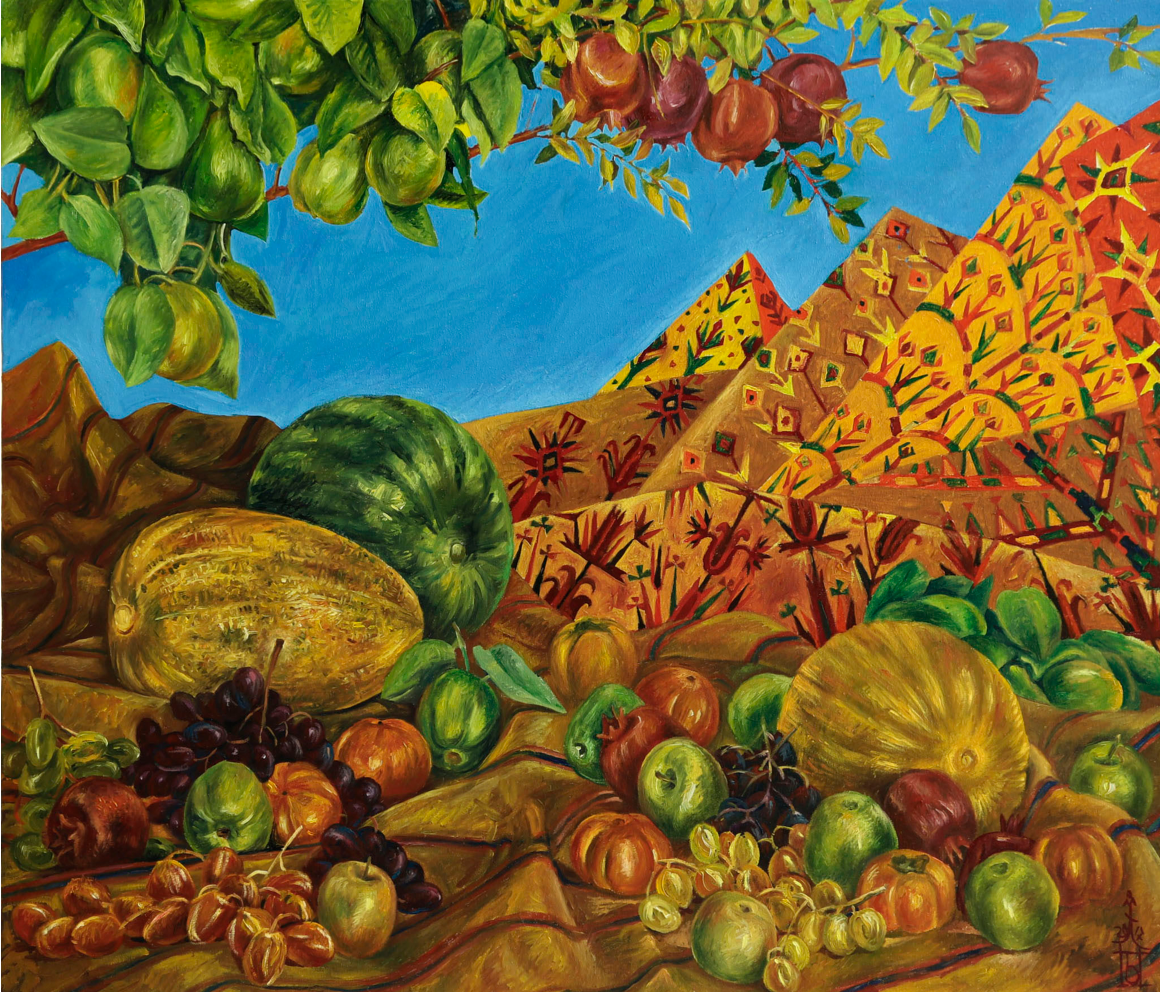
Space is originally settled in B. Amansahatov’s still life “Ashgabat Autumn”, in which natural and artificial things are skillfully juxtaposed. Due to its facelessness, it does not characterize objects, but objects with their outlines, their rhythm characterize space. In a luxuriously covered Desterhan, the artist praises the richness of the fertile Turkmen land. Ornamental tablecloth, “sachak”, is the vast expanses of fields, whereas juicy fruits and vegetables are the generous gifts of nature. The artist appeals to a lively, sensually-specific interpretation of nature, to greater natural authenticity with emphasized decorativeness of the pictorial language as one of the means of enhancing the perception of the viewer. He operates with large tonal spots that help realistically reproduce spatial ratios.
Bell Toll - 2017
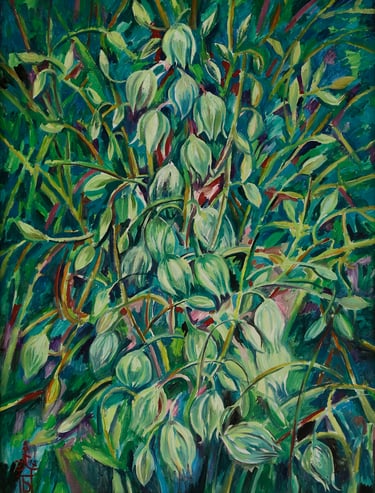
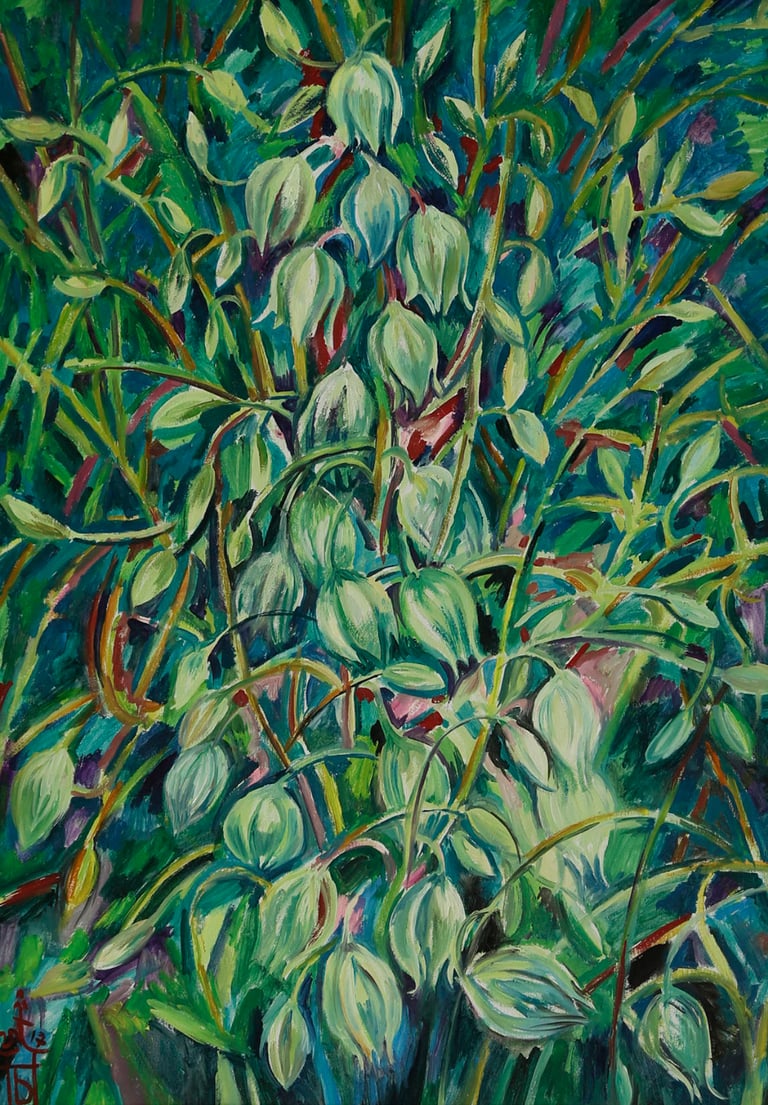
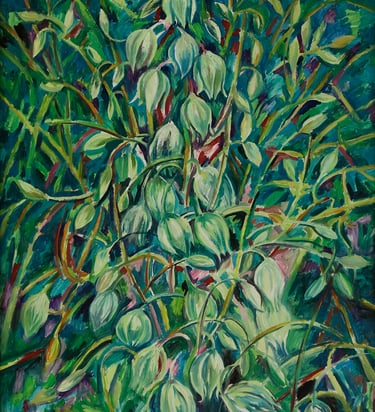
Nature for artist is a source of inspiration. In the work “Bell toll” the image of the bellflowers anticipates the features of large paintings of the artist with his favorite motifs of jewelry. The bright decorative temperament of the master is combined with the fidelity to the sensation of life. A comparison of the light green hue of the flower to a dark blue-green background makes the color scheme distinct bright and sonorous. Vivacity and pliability of the strokes emphasize the bends of the twigs, leaves and flowers. In their restless motion the artist organizes a space full of life and movement.
Fragrant Roses In My Yard - 2017
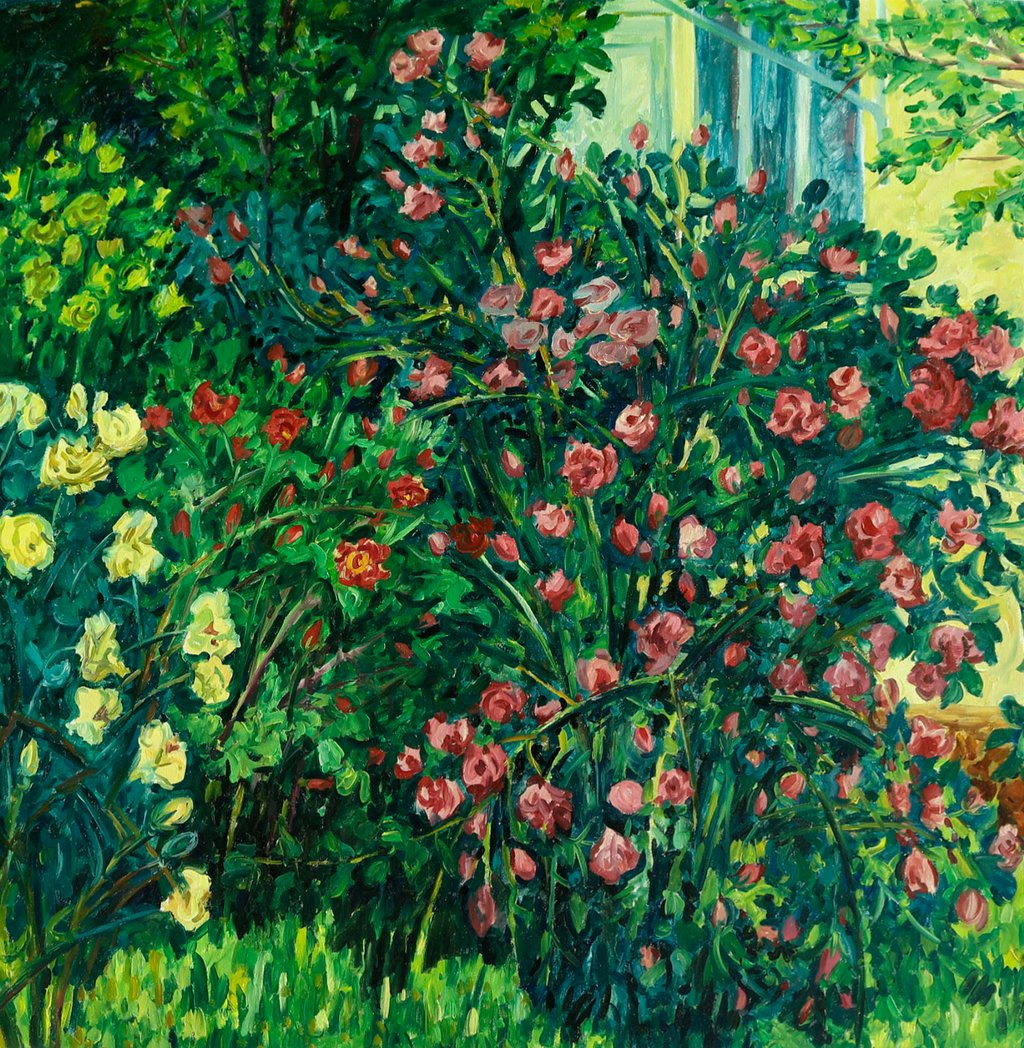
The sonorous coloristic scale, variety and accuracy of tonal relations of the picture are characteristic to the picture “Fragrant roses in my yard”. Young emerald grass spreads as a juicy velvet carpet, blooming bushes of yellow, red roses smell as festively decorated fireworks. The windows of workshop reflect the warm gentle sun rays.
Series: "One Thousand And One Nights"
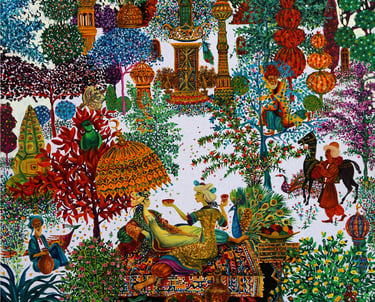
A Tale Of Two Viziers And Anis Al-Jalis - 2017
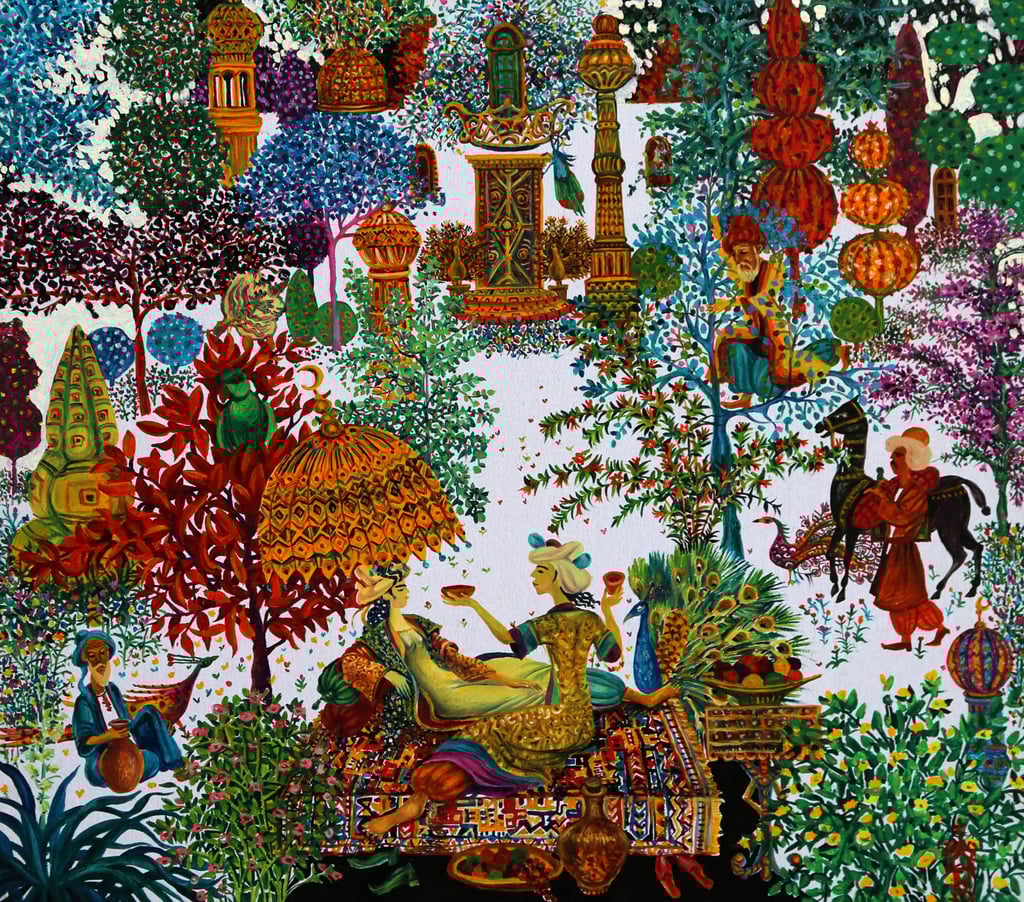
In “A tale of two viziers and Anis al-Jalis” Berdiguly Amansahatov got interested in description of Amusement and palace of Pleasure and Images belonging to the caliph of Baghdad Harun ar-Rashid. We see Nur-ad-Din, feasting with his beloved Anis-al-Jalis, the gardener, Sheikh Ibrahim with a jug filled with wine, as well as the Caliph, dressed into merchant’s clothes, who has climbed a tree to observe the happening of his companion, vizier Jafar.
We see numerous participants of the wedding celebration of the brothers Shamsad-din and Nur-ad-din’s children. The artist glorifies a passionate love at first sight lit in the hearts of young lovers. With the advent of love the dark sides of their lives turns into light at instant moment. At the same time, light moments of the unfortunate hunchback turn into darkness.
A Story About Vizier Nur Ad-Din And His Brother - 2017
A Tale About Aladdin's Wonderful Lamp - 2017
The basis of the image is the motive of a magic talisman, to which the Almighty genie blindly obeys in the painting “Tale about Aladdin’s wonderful lamp”. However, in comparison to the story of “One thousand and one nights”, where the hero, son of a poor tailor, with the help of a magical object gains wealth and marries the daughter of the Sultan, Berdiguly Amansahatov interprets it differentlyss.
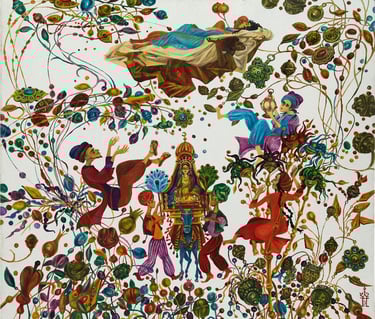
A King For An Hour - 2017
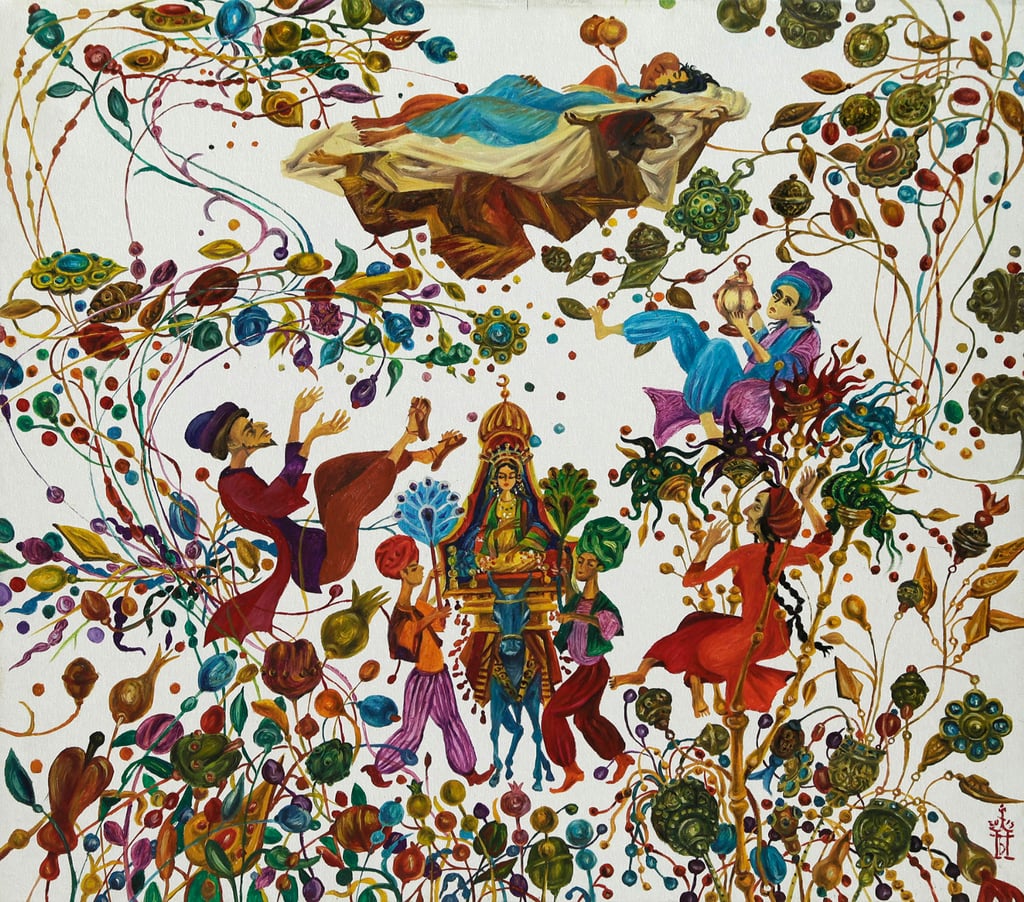
Painting “A king for an hour” tells about a life of reveler, Abu al-Hasan, at the time of his short reign in the palace. The artist is attracted by a mystification of a plot which gives the main character ability to continue his cheerful and carefree life.
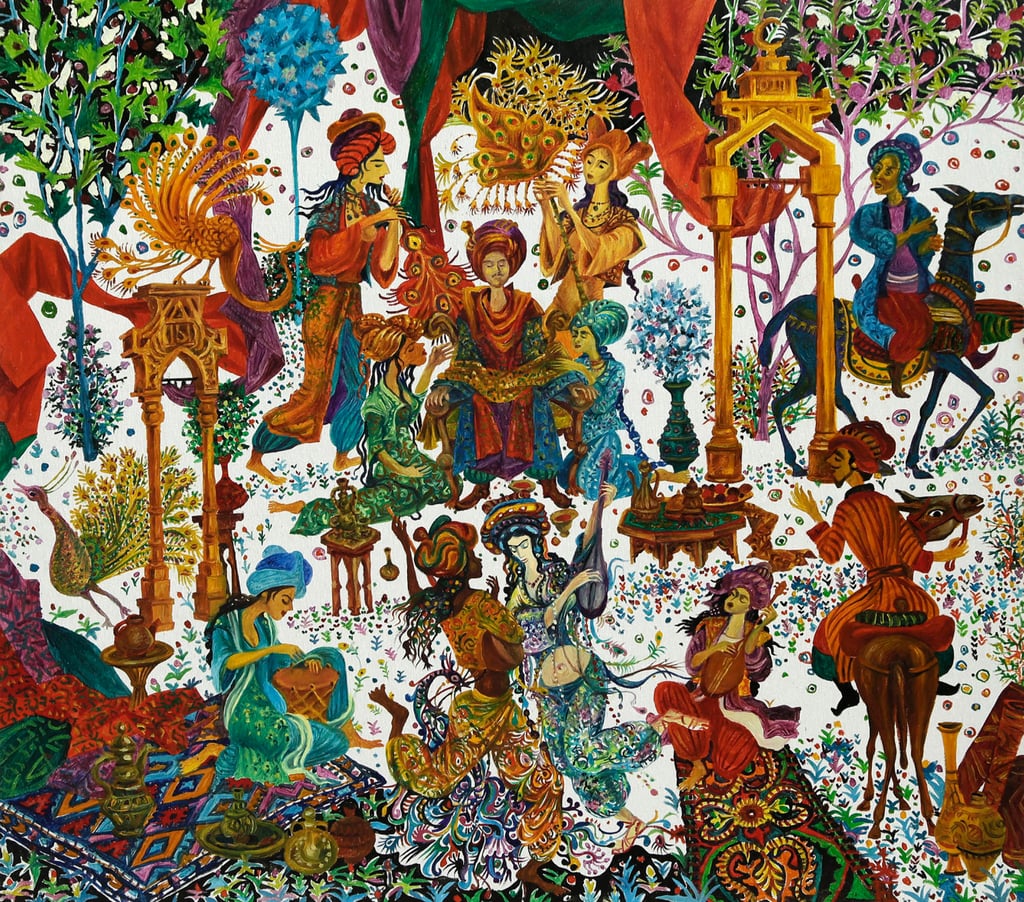
A King For An Hour - 2017
Painting “A king for an hour” tells about a life of reveler, Abu al-Hasan, at the time of his short reign in the palace. The artist is attracted by a mystification of a plot which gives the main character ability to continue his cheerful and carefree life.
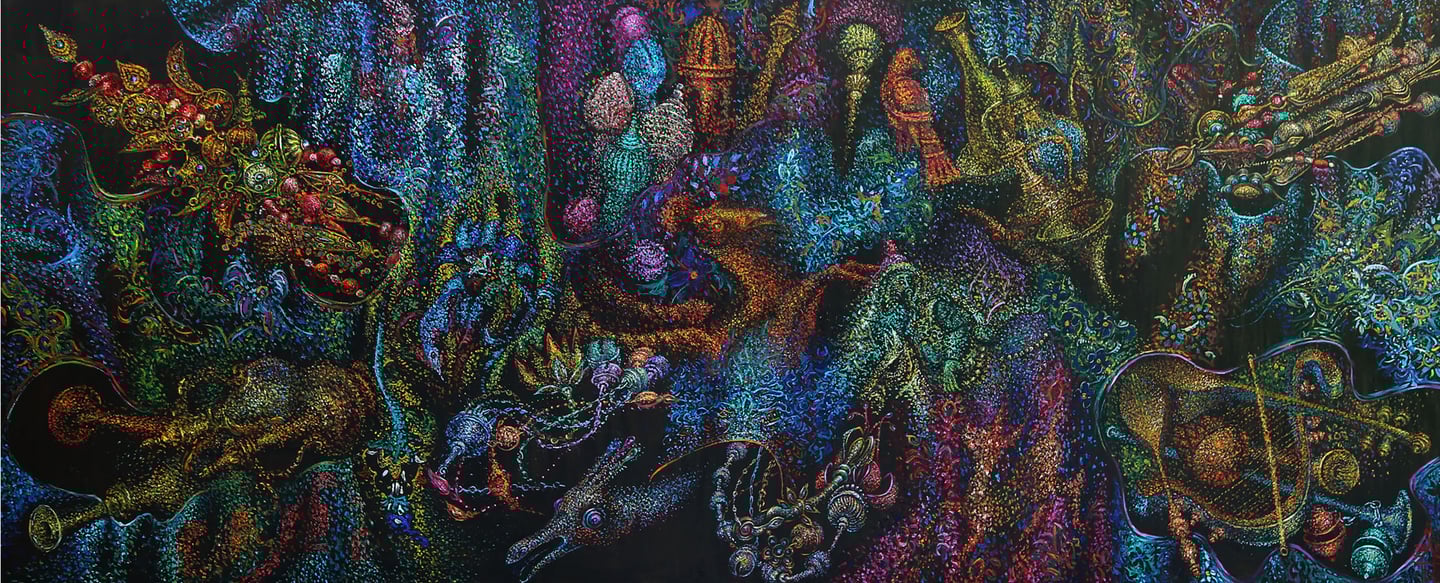
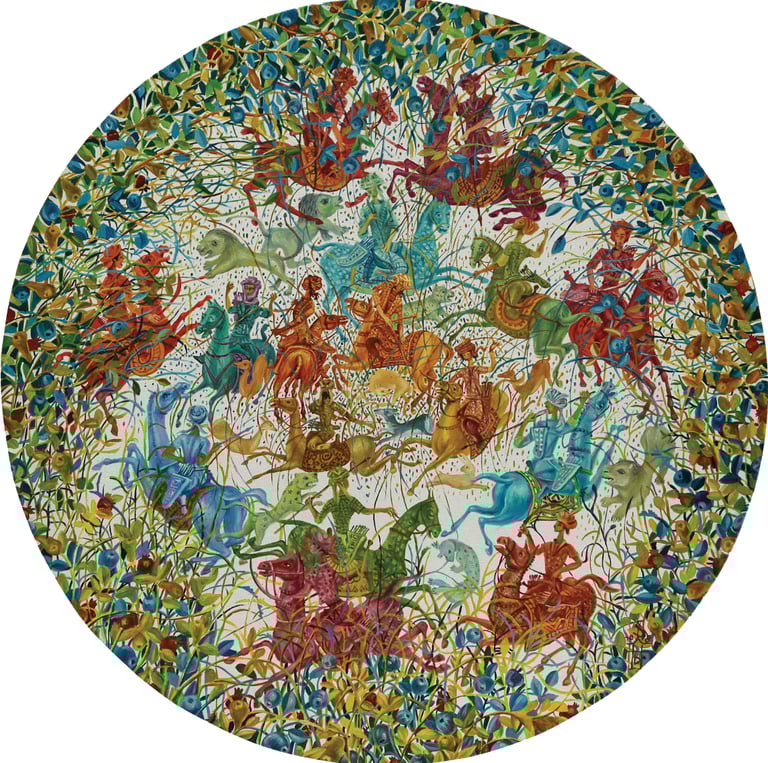
Royal Hunt - 2018
The painting “The Royal Hunt” from the series “One thousand and one nights”, done in the “tondo” format, reveals the mysterious world of royal pleasures – a scene of a medieval hunt. It is a dynamic composition in a circle with refined movements of hunters, interpreted in the traditions of oriental miniatures and complemented by a circular frame of floral patterns. This vegetative - ornamental frame gives a theatrical character to the genre plot.
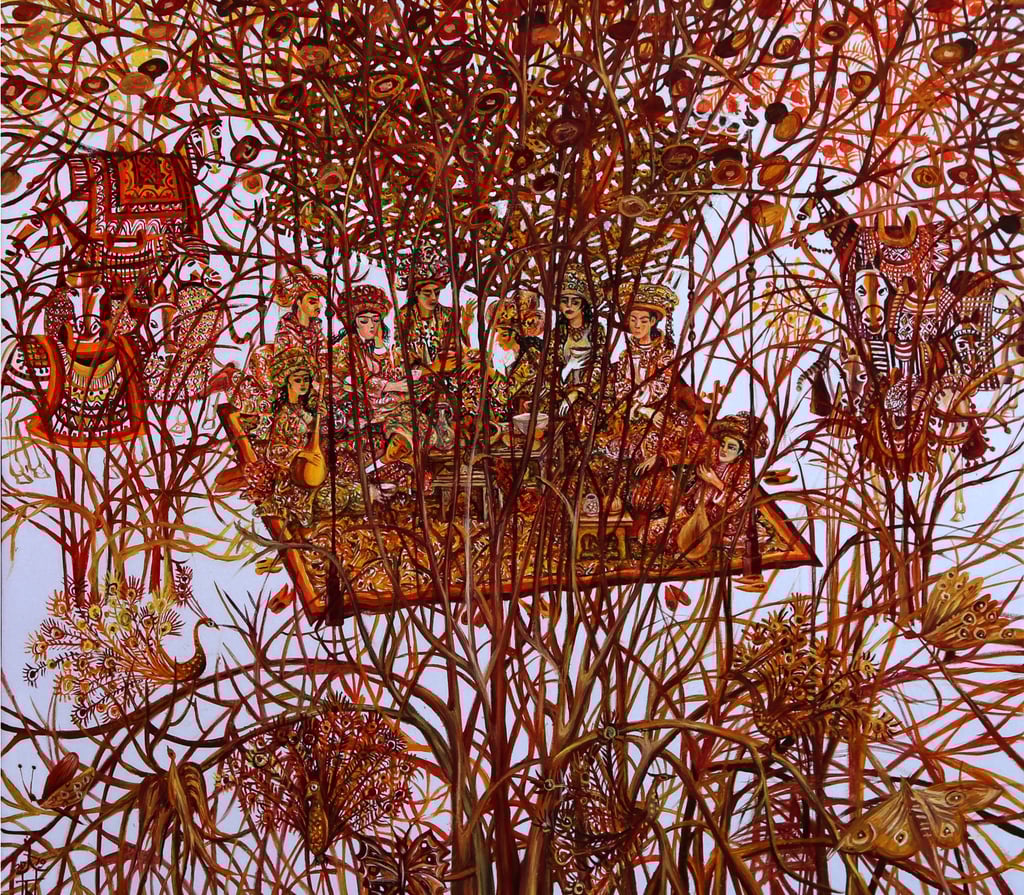
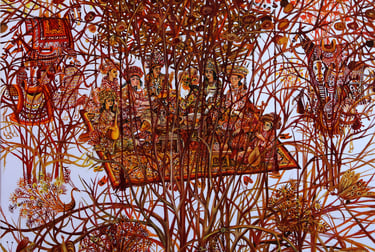
The Lute Player Leaned Toward Us, She Suddenly Got Drunk With Wine - 2019
Painting’s warm coloring built on brownish tones with splashes of pink contoured by sometimes a thin, sometimes wide dark brown line brings the style of painting closer to the decorativeness of folk art. The scene of leisure of carefree young princes reveals for the viewr behind the silhouette of trees with flexible tweeds. Almost monochrome painting on white canvas is expressive, eloquent and laconic. It follows the strict layout of the genre scene.
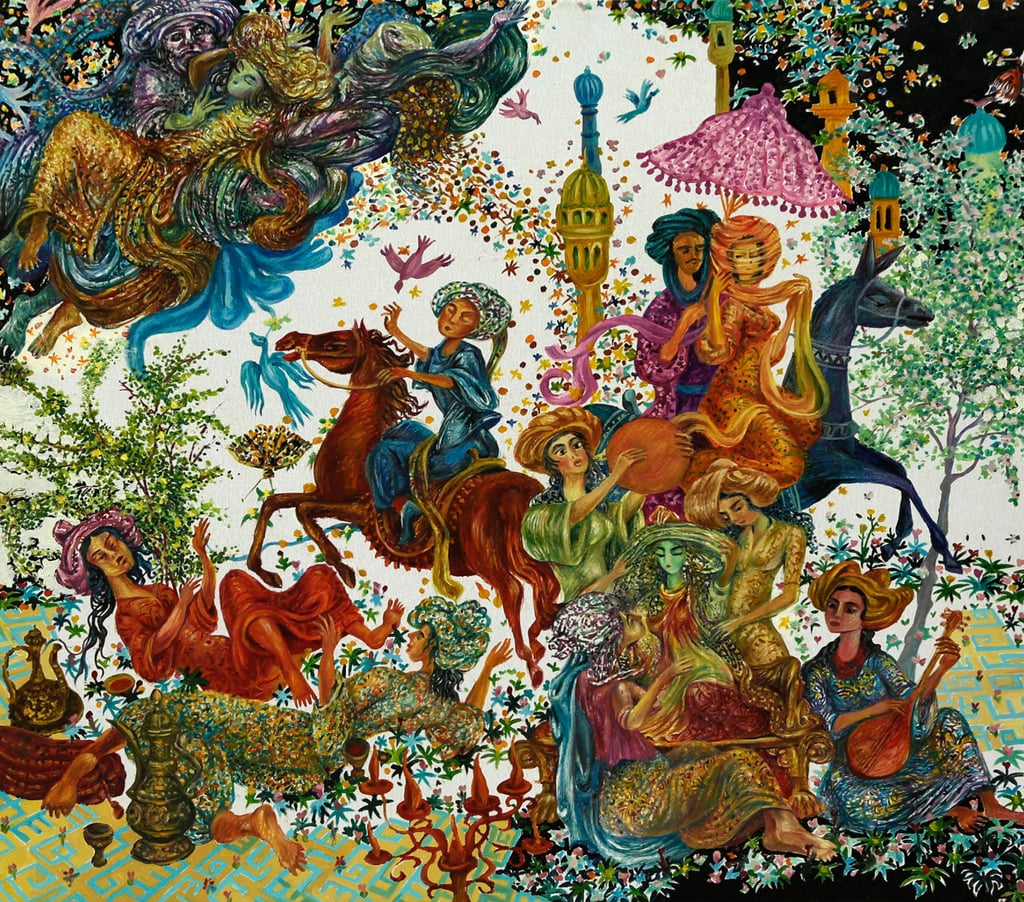
The Story of Ali Ibn Bekkar and Shams An Nahar - 2018
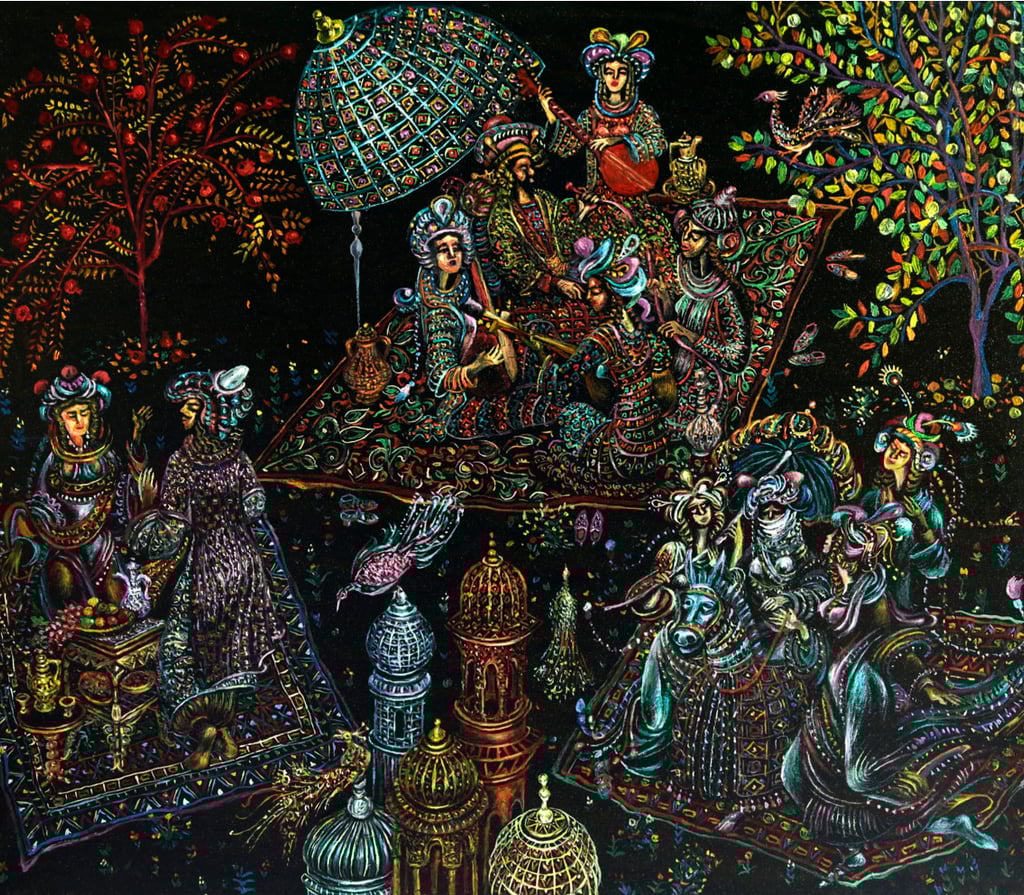
“The time of intimacy is too short, For the delay of your games” The artist enthusiastically interprets the world of objects in the epic-romantic painting “The Tale of Ali ibn Bekkar and Shams an Nahar”. The picture is filled with images of palaces with beautiful domes, gardens, banquets and court festivities, luxurious robes and sparkling vessels. The images of beautiful boys and girls are more types than characters. The artist helps the viewer to admire the beauty.
Flight In A Dream - 2019
The painting “Flight in a dream” is basically metaphorical. Images of couples in love, rhythmically arranged in a circle, harmonize with numerous decorations. They perform various functions contributed to the development of the plot, strengthen the emotional emphasis and expression of artistic language, enrich the semantic load of pictures making it more theatrical.